
Inversion Fair Value Gap (iFVG)
When a Fair Value Gap is invalidated, it becomes an Inversion Fair Value Gap.
What is an iFVG?
An iFVG is an Inversion Fair Value Gap, which is a PD Array that is created when a Fair Value Gap (FVG) is invalidated.
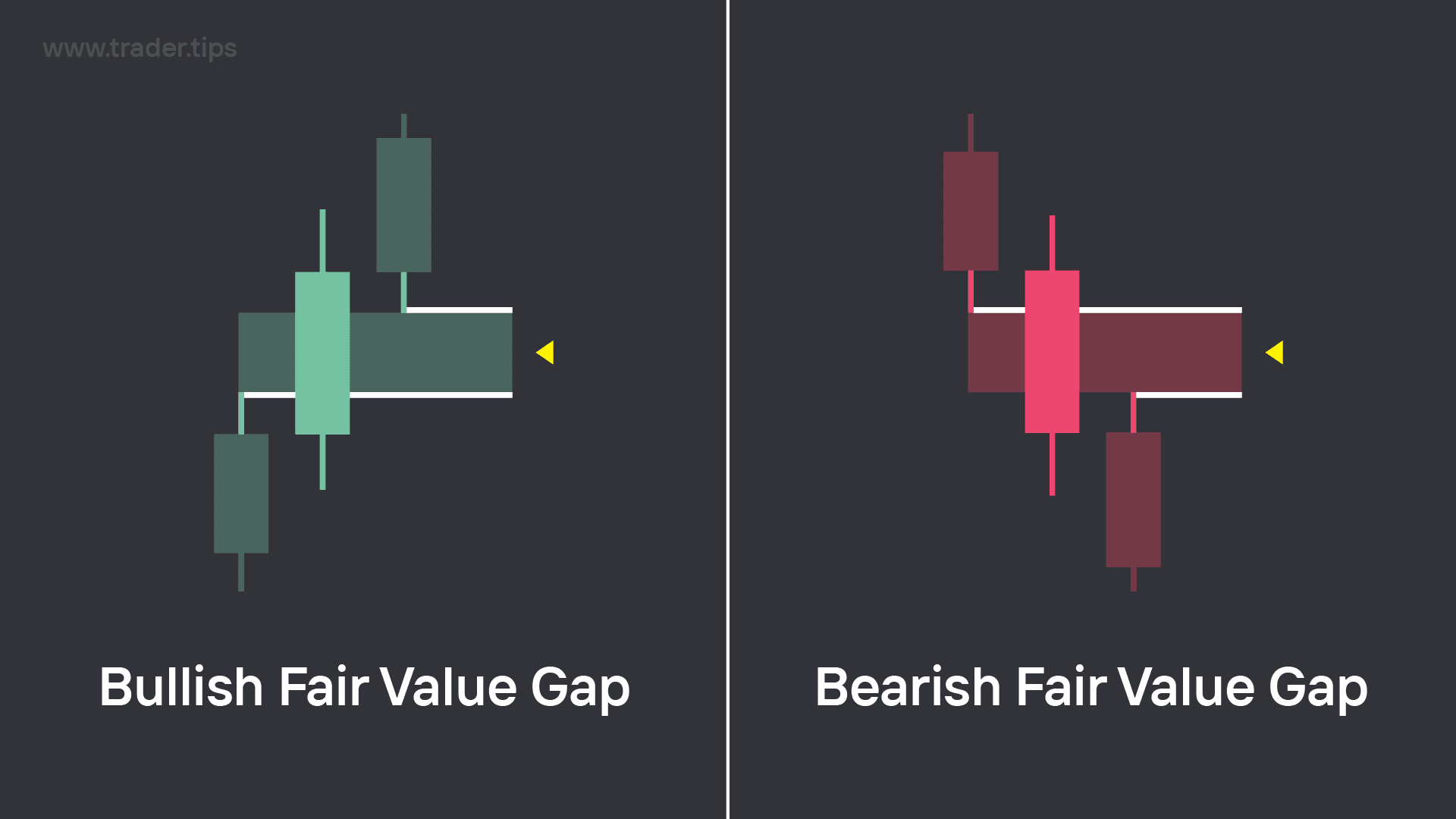
Examples of a Bullish FVG and a Bearish FVG.
Fair Value Gaps are a 3 candle pattern where there is no overlap between the top wick of the 1st candle and the bottom wick of the 3rd candle (Bullish Fair Value Gap), or when there is no overlap between the bottom wick of the 1st candle and the top wick of the 3rd candle (Bearish Fair Value Gap).
Bullish FVGs are treated as areas of support.
Bearish FVGs are treated as areas of resistance.

Examples of a Bullish iFVG and a Bearish iFVG.
When an FVG is invalidated, it doesn't cease to be useful, instead it actually becomes a new PD Array, which is an iFVG.
When a Bearish FVG is invalidated, it becomes a Bullish iFVG.
When a Bullish FVG is invalidated, it becomes a Bearish iFVG.
The crucial criteria for what confirms the invalidation of an FVG, and the creation of an iFVG, is that price must push through and close past the area of the FVG.
Bullish iFVG
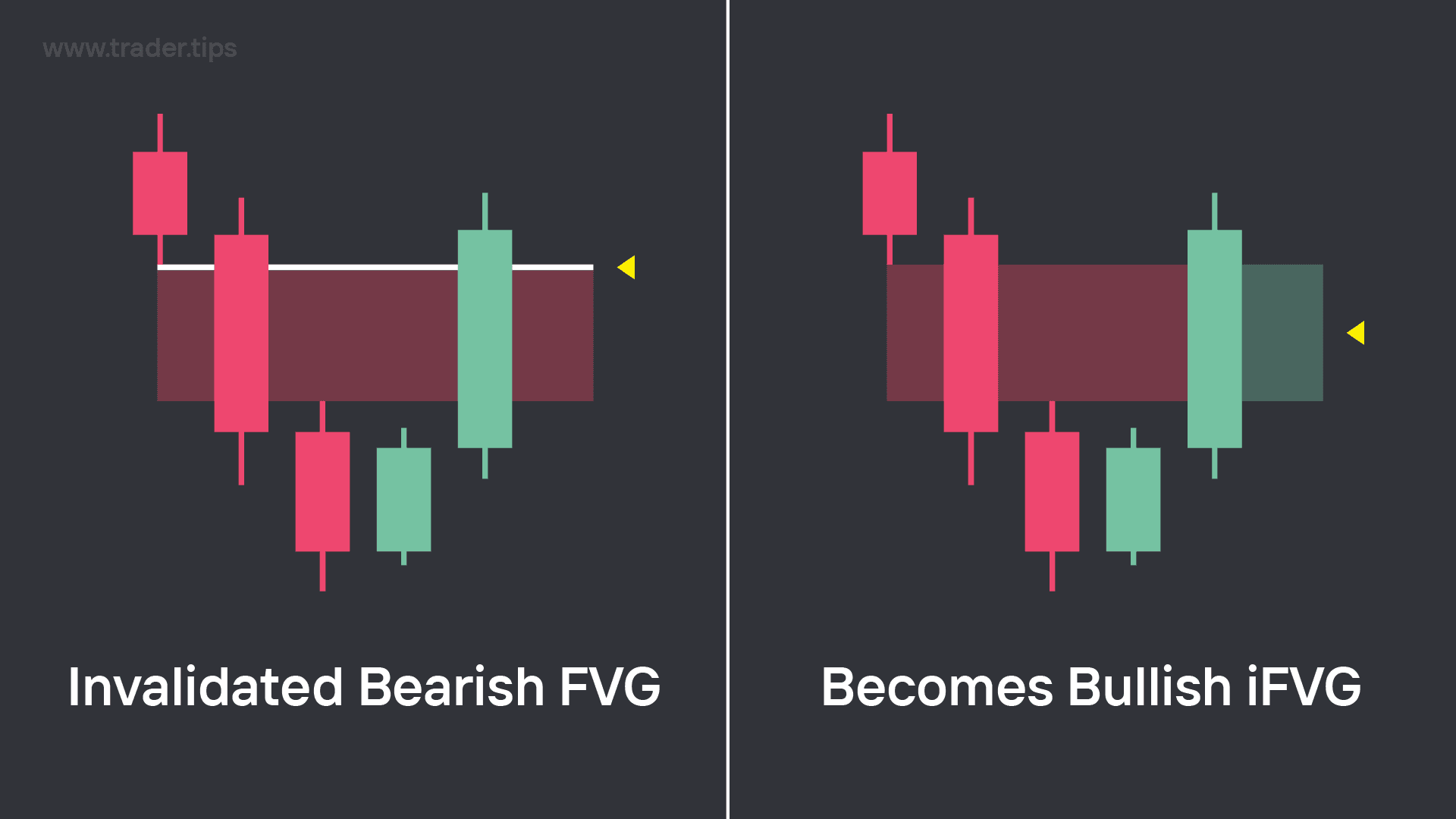
Creation of a Bullish iFVG.
A Bullish iFVG is created when a Bearish FVG is invalidated.
This means that price will have pushed up and through the Bearish FVG area, and most importantly, closed above the FVG area.
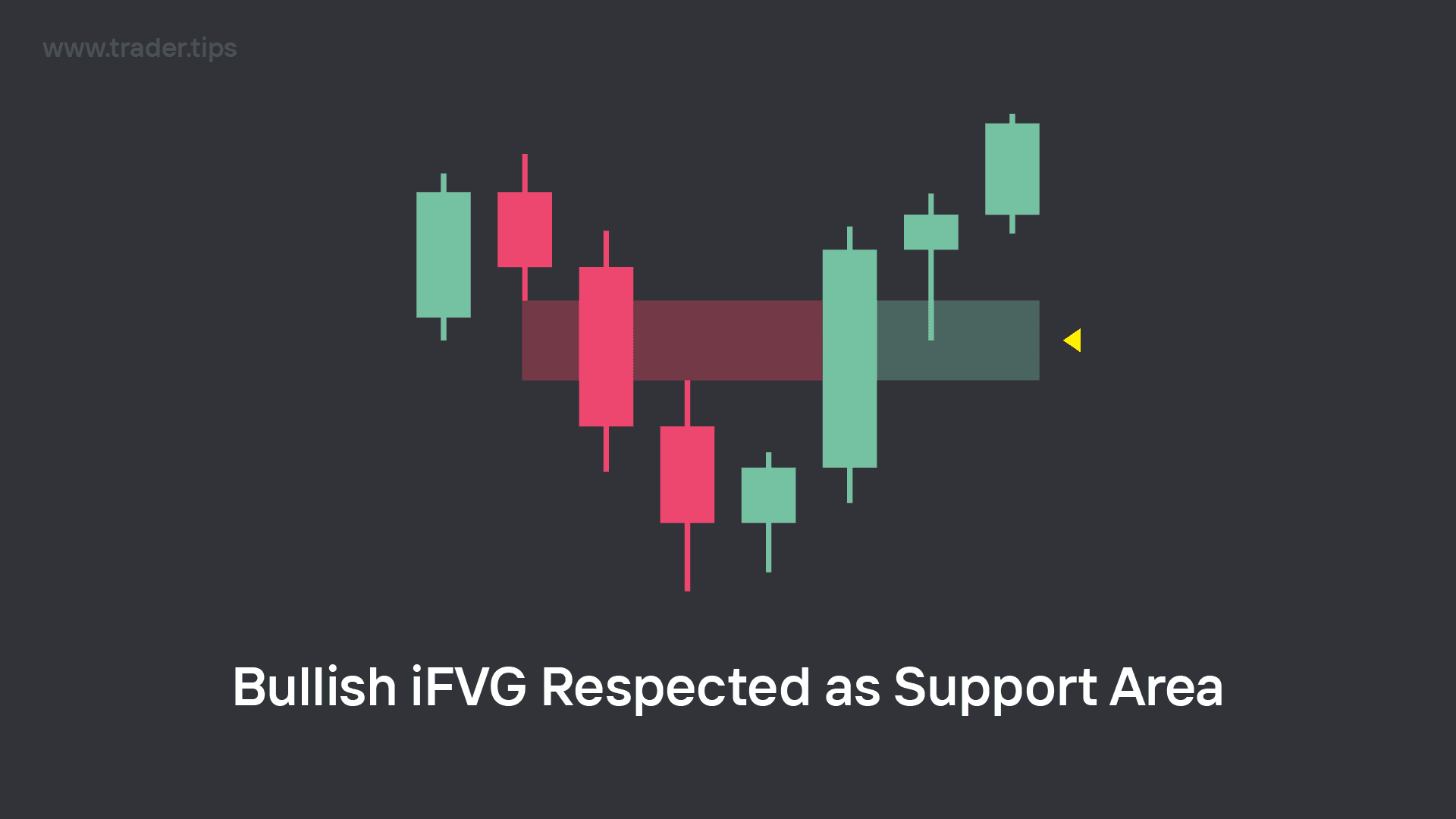
Bullish iFVG Respected as an Area of Support.
A Bullish iFVG signals a flip in directional momentum, from Bearish to Bullish.
This means the area that we would previously be using as a potential Resistance area, is now used an area of potential Support.
Bearish iFVG
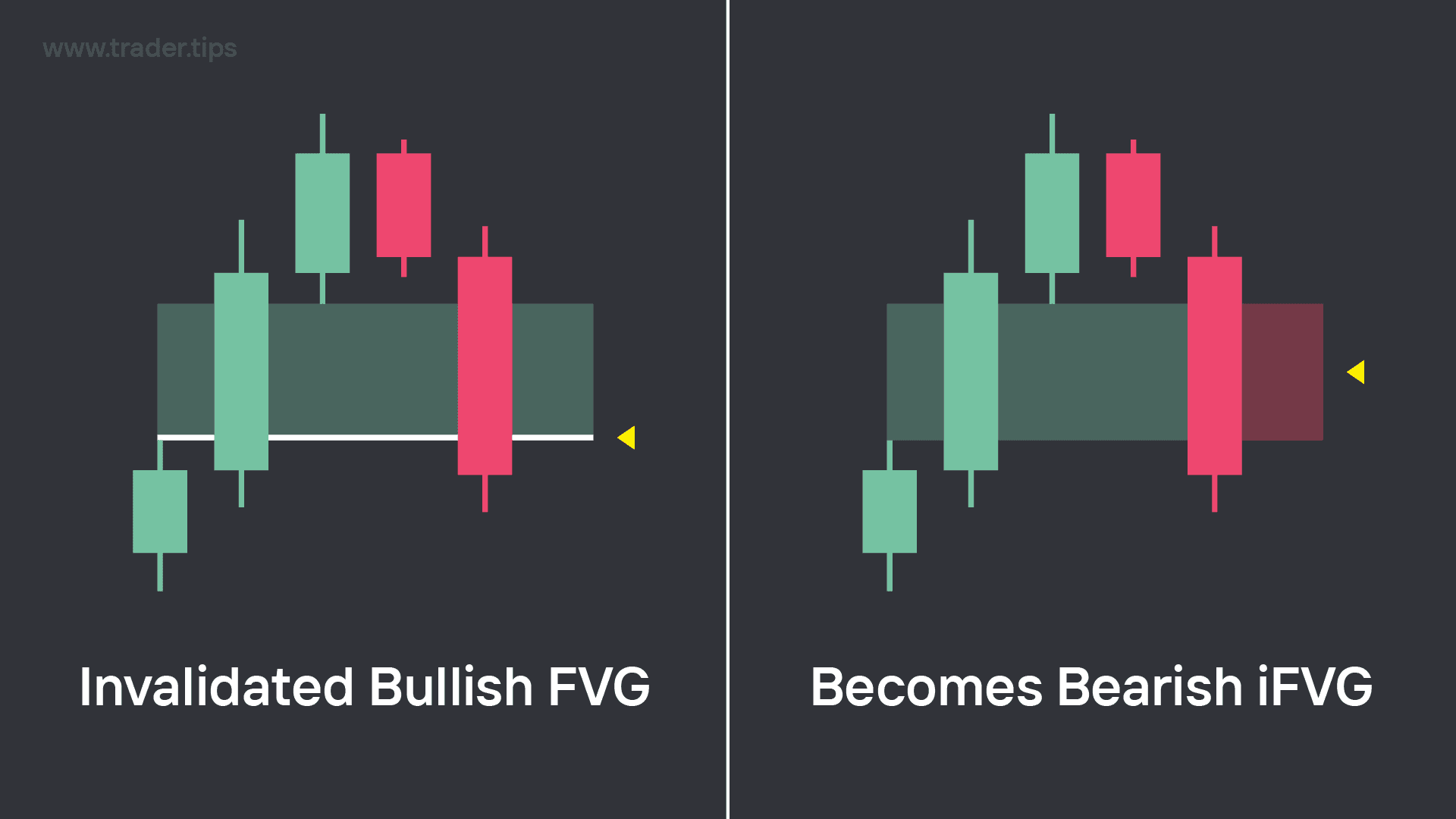
Creation of a Bearish iFVG.
A Bearish iFVG is created when a Bullish FVG is invalidated.
This means that price will have pushed down and through the Bullish FVG area, and most importantly, closed below the FVG area.
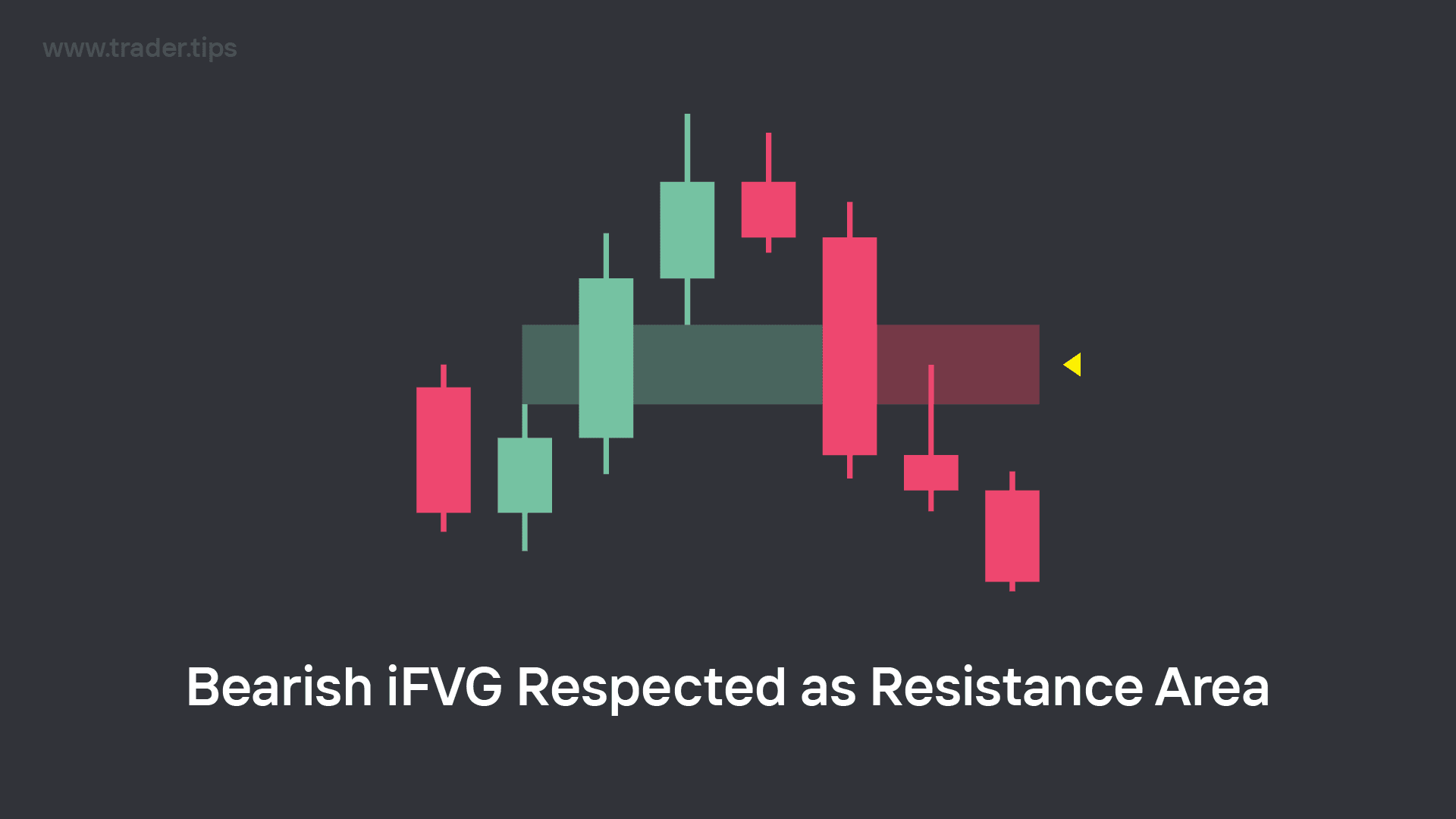
Bearish iFVG Respected as an Area of Resistance.
A Bearish iFVG signals a flip in directional momentum, from Bullish to Bearish.
This means the area that we would previously be using as a potential Support area, is now used an area of potential Resistance.
How are iFVGs used?
An iFVG is used as a signal that a potential reversal move is forming in the market.
This is why iFVGs are best used as a signal indication AFTER a key level has been hit.
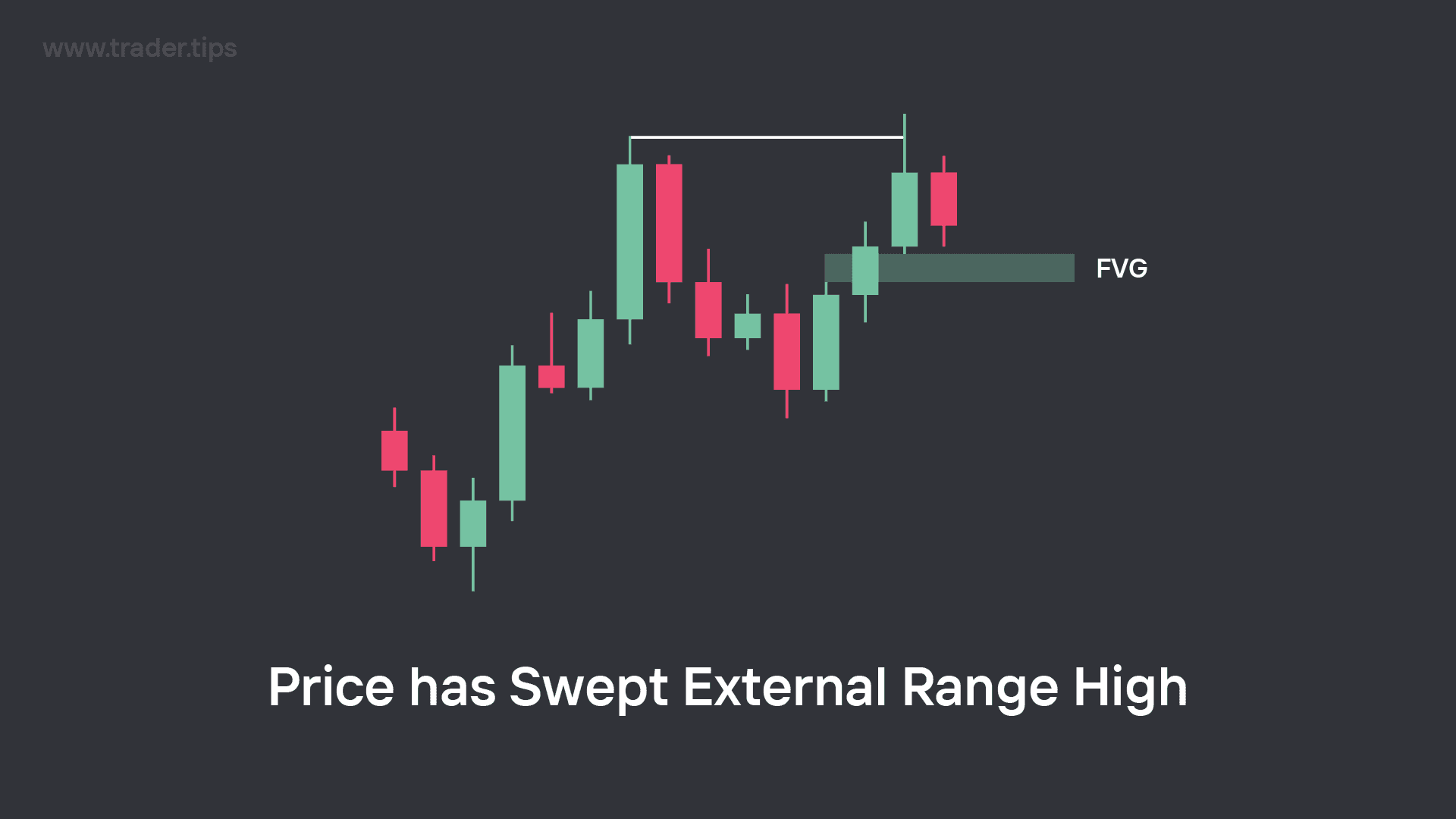
Price Sweeping an External Range High.
For example, when price hits an External Range Liquidity level, it's very common to then see a pullback form.
If there is a Fair Value Gap within the leg that the market pulls back to, depending on how the market treats this FVG area, it can give us a great insight on where price might move to next.
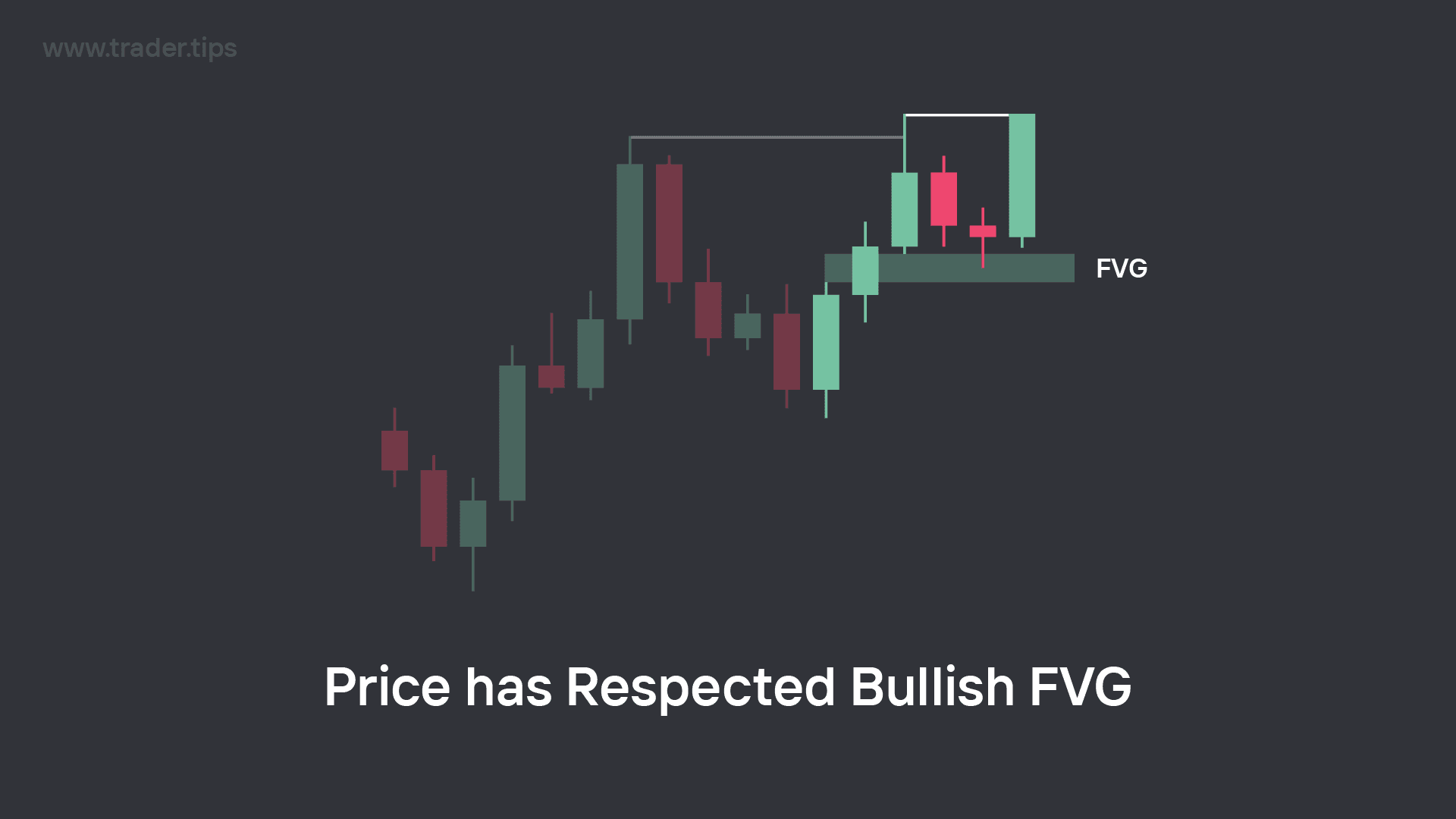
Price Respecting the Area of the Bullish Fair Value Gap.
In the case that the market respects the FVG, we might then expect price to want to move further higher.
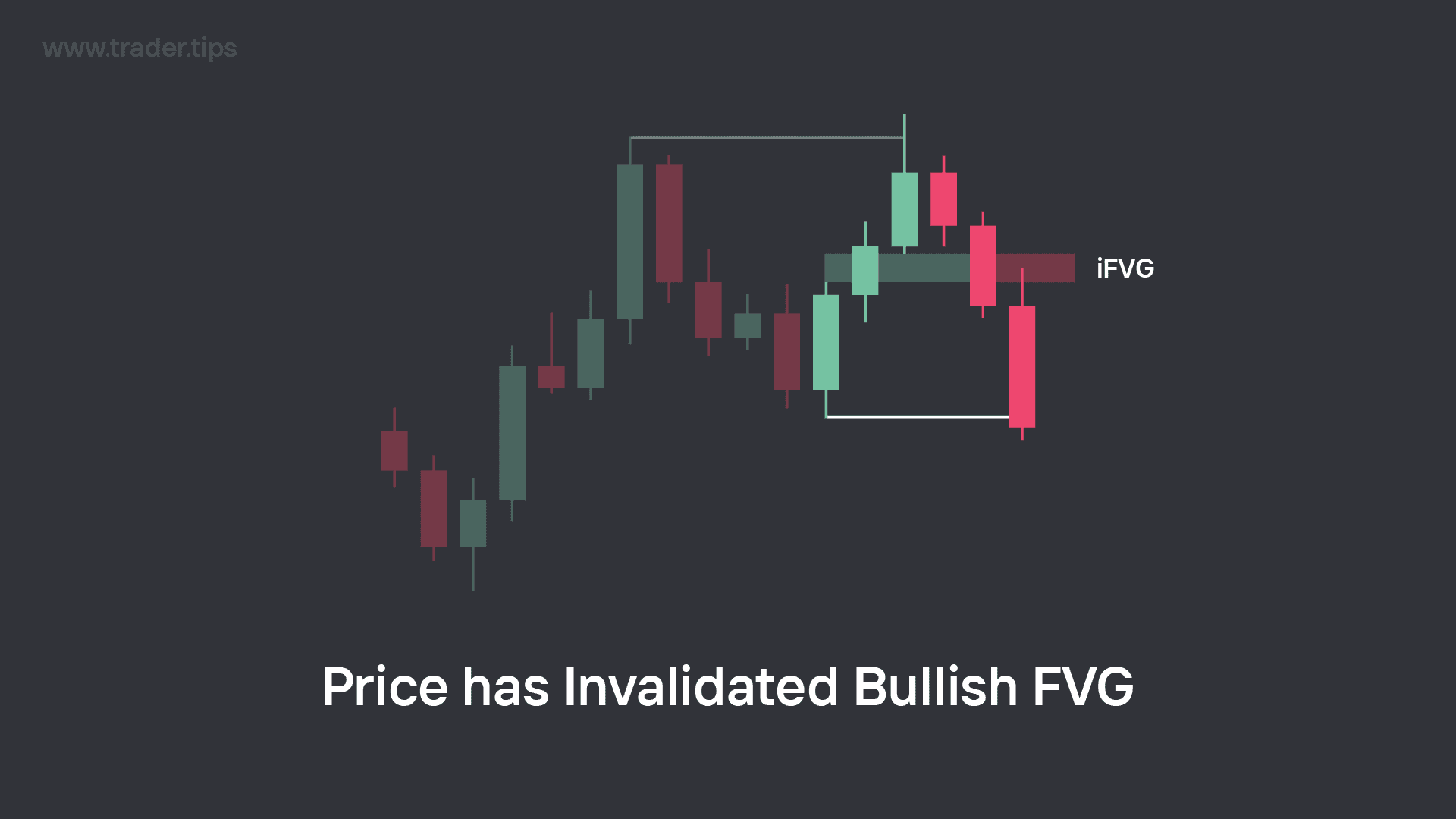
Price has Invalidated the Bullish FVG, creating a Bearish iFVG.
However, if price disrespects the FVG area by pushing through it and closing past it, this invalidation creates an iFVG.
This iFVG creation is what we can use as a signal that price might want to expand lower, to target more distant PD Arrays.
This is how iFVGs can be used to determine reversal moves.
When to use iFVG Setups for trades
An iFVG is used as a confirmation signal of a Bullish-to-Bearish or Bearish-to-Bullish flip in momentum.
This is why we only want to use them after a significant event has occurred where we might reasonably expect a reversal move to occur, not just any time a FVG is invalidated.
There are 2 specific scenarios where we might look for iFVG setups for trade entries, which are:
Reversal confirmation after a Higher Timeframe Liquidity Level is swept.
Reversal confirmation after a Higher Timeframe FVG has been respected.
Both of these scenarios involve some form of reversal move occuring on the lower timeframes.
iFVG after HTF Liquidity Sweep
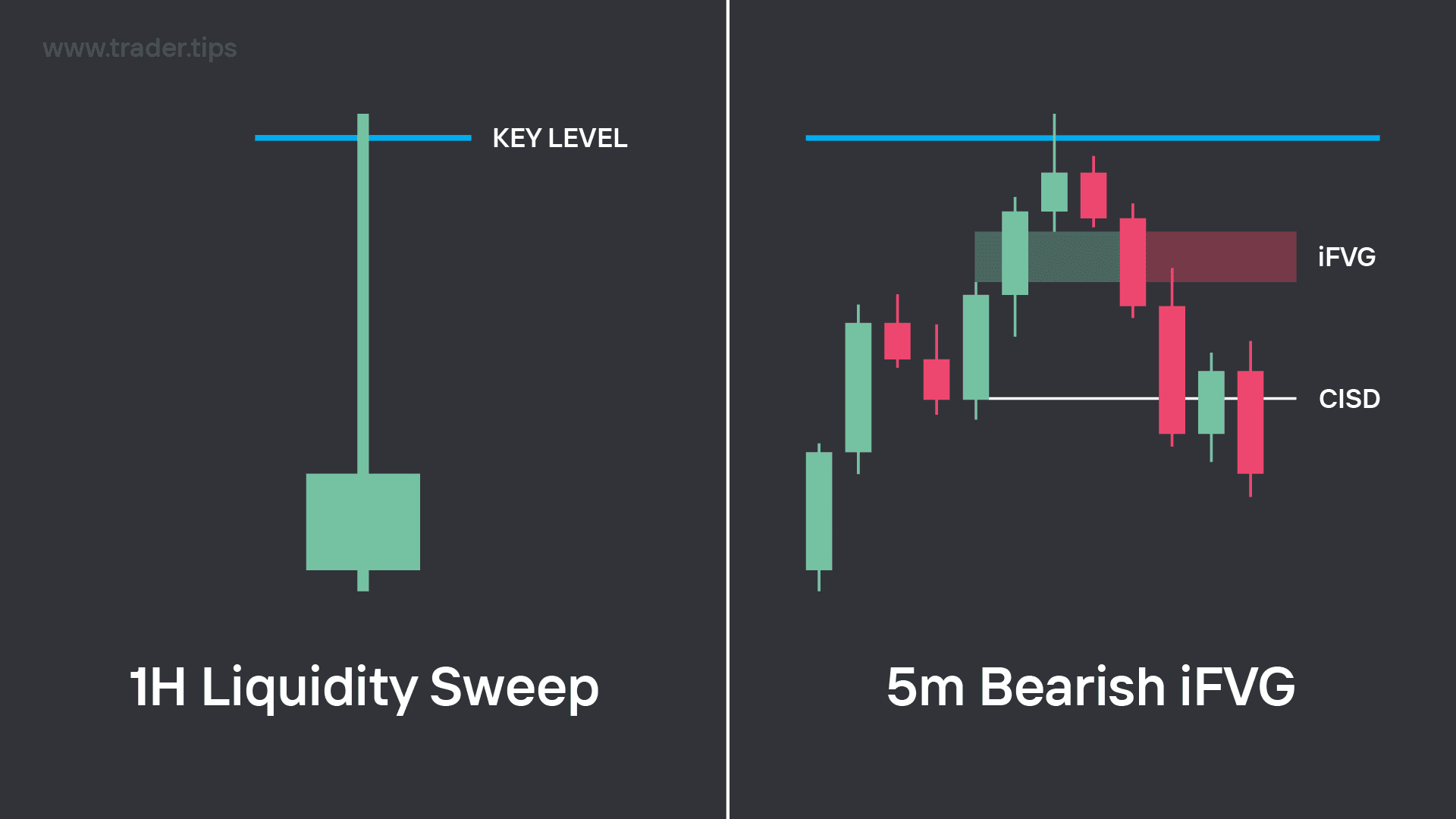
5 Minute iFVG creation after a Sweep of a Higher Timeframe Liquidity Level.
The most popular method for iFVG trading is to wait for the creation of a lower timeframe iFVG after price has swept a higher timeframe Liquidity level.
For example, in the image above, on the left we have the a 1 Hour candlestick that has a hit an External Range Liquidity level. It's long top wick is a clear sign of a strong rejection from the level. But this 1 Hour candle alone wouldn't be enough information to form a trade idea from.
But then when we look at the lower timeframe 5 Minute market structure of the 1 Hour candle, we can see that there was a 5 Minute FVG.
With the higher timeframe Liquidity level being hit, we can now anticipate that a reversal move can potentially occur.
This is where we can wait to see whether the market will respect this area as support, or disrespect it to create a Bearish 5 Minute iFVG, which can then be used as a reversal confirmation to enter a short trade.
iFVG after respecting HTF FVG
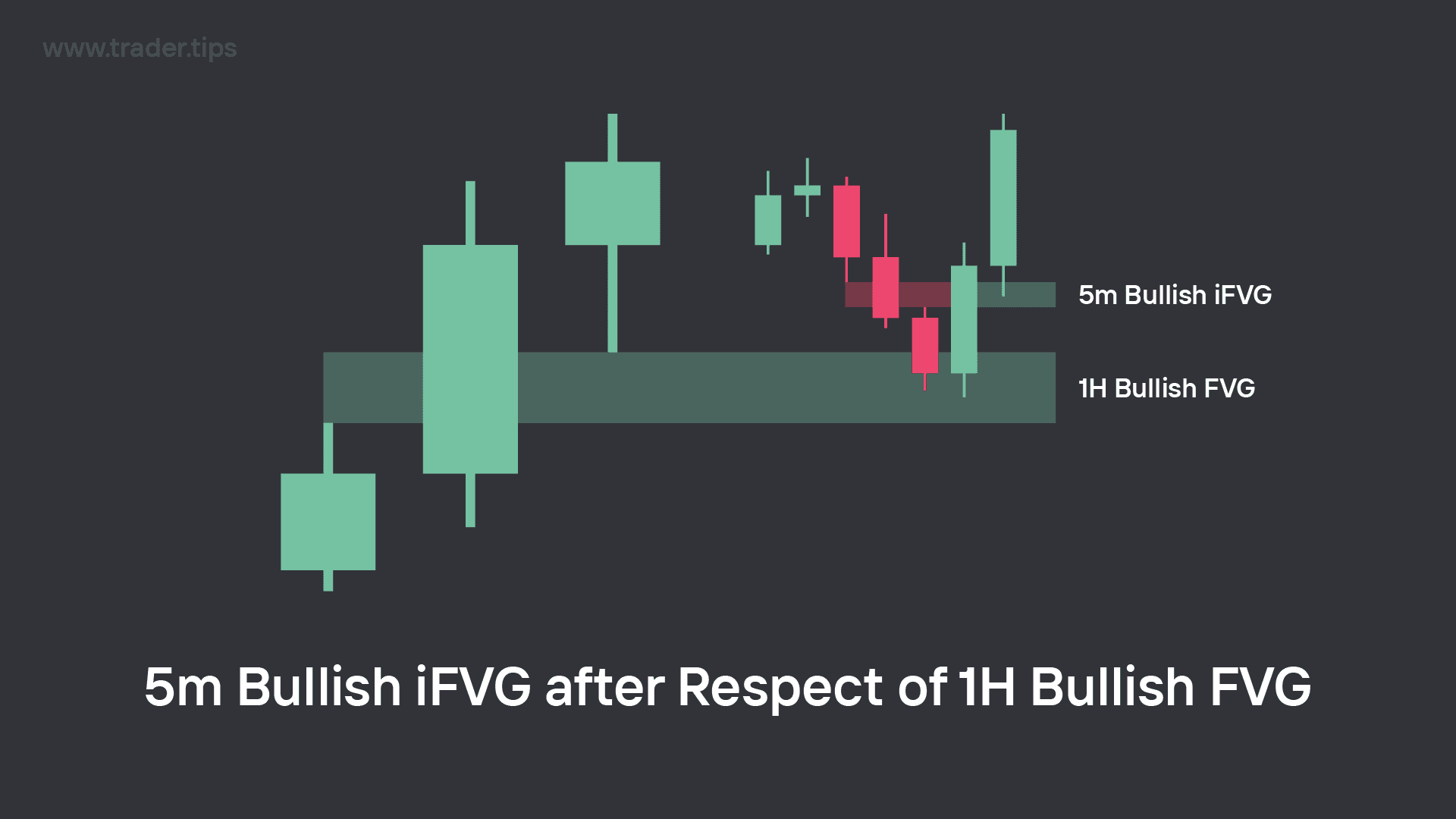
Lower Timeframe iFVG creation after Respect of Higher Timeframe FVG.
Another popular way to use iFVGs is to use them as a confirmation signal that a higher timeframe Fair Value Gap is being respected.
For example, in the image above we can see that a Bearish 5 Minute FVG was created during the leg that tested the higher timeframe 1 Hour FVG.
After price started to push back up as a result of respecting the 1 Hour FVG as support, it then invalidates the 5 Minute Bearish FVG, creating a Bullish 5 Minute iFVG.
This allows us to firstly confirm that the 1 Hour FVG is being respected, but also offers a potential long setup with the 5 Minute iFVG, using the larger timeframe respected PD Array as confluence.