
Order Blocks
Order Blocks are a continuation block.
What is an Order Block (OB)?
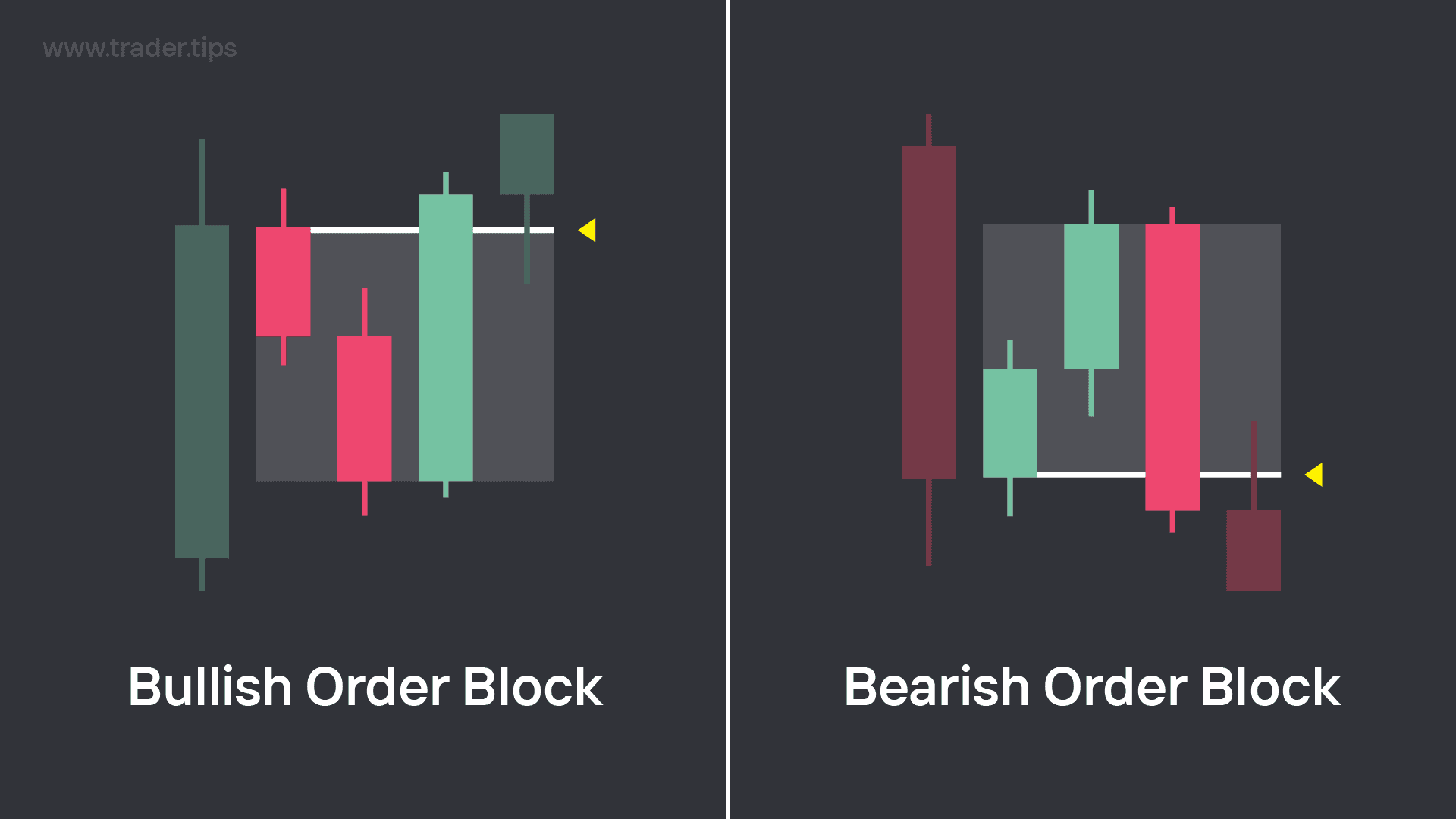
Example of a Bullish Order Block and a Bearish Order Block.
Order Blocks are created when the market creates a reversal leg that engulfs the most recent opposing leg.
Order Blocks can be used as Support (Bullish Order Block) or Resistance (Bearish Order Block), to create the next swing point.
Bullish Order Block
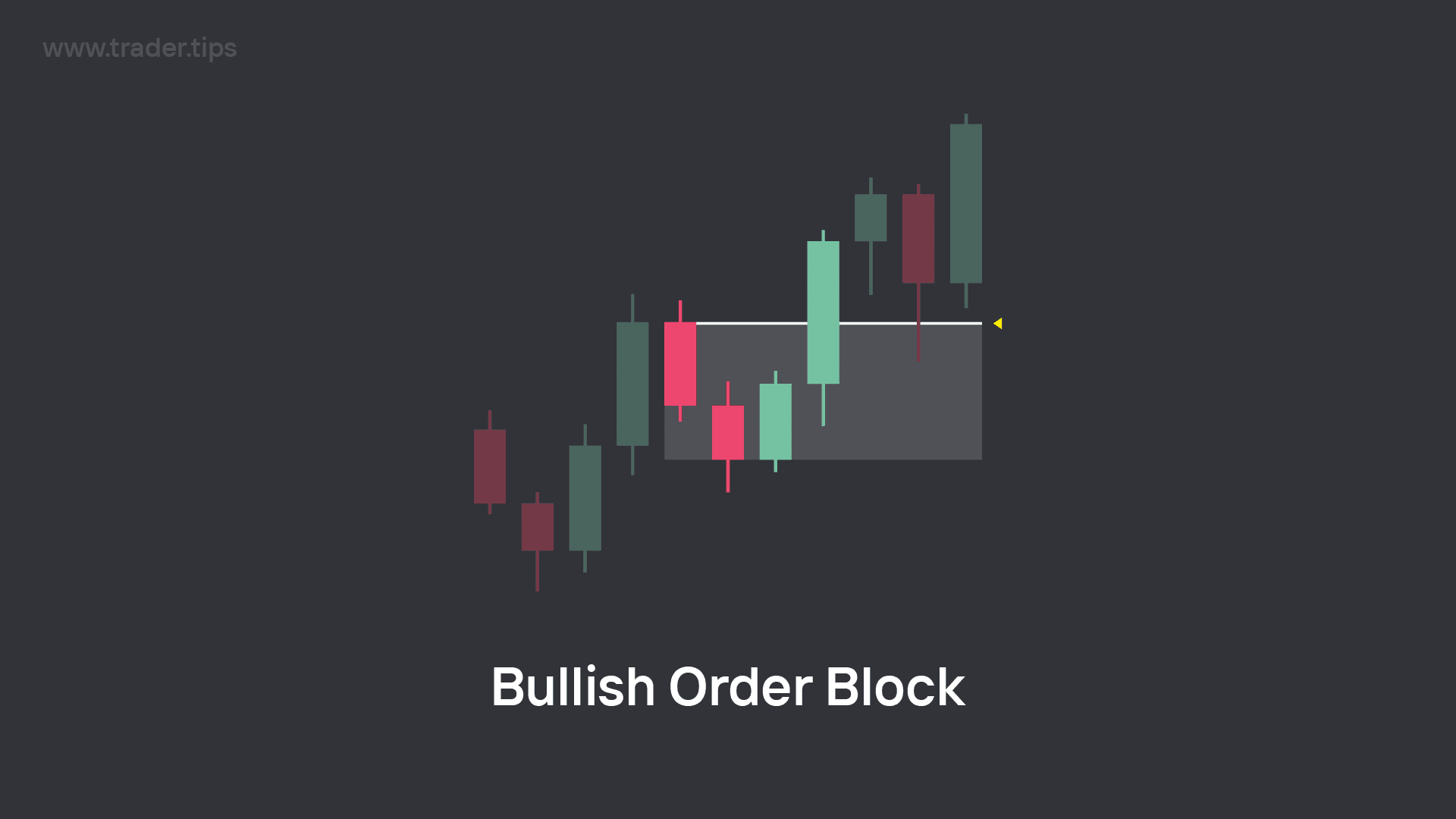
Example of a Bullish Order Block being respected as Support.
A Bullish Order Block is created when price pushes up, and most importantly, closes past the open of the first bearish candle in the most recent series of bearish candles.
This signals a shift from bearish price action (bearish series of candles) to bullish price action (new bullish leg) with the expectation that the market will then continue expansion to the upside in the following candles.
Bearish Order Block
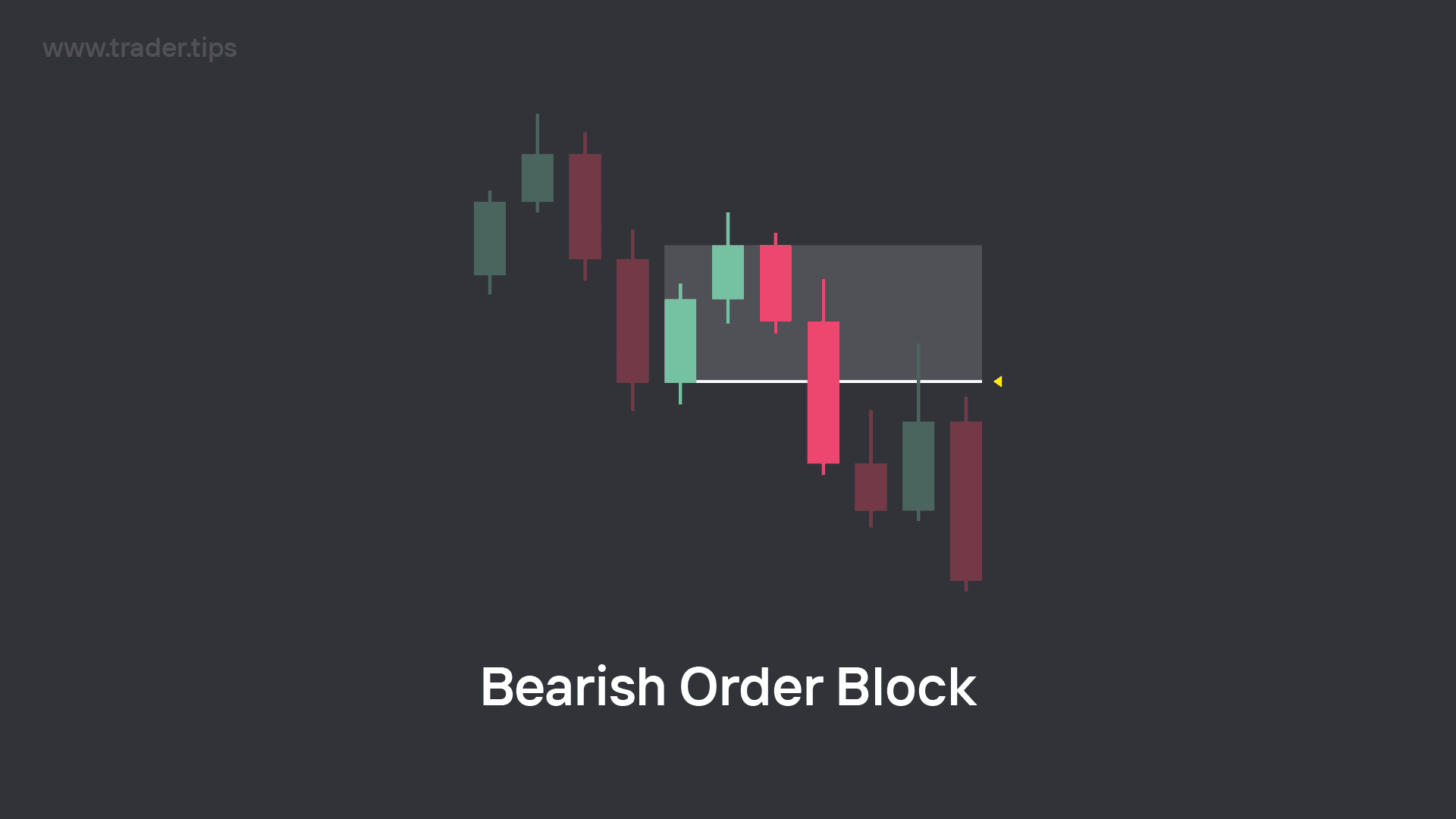
Example of a Bearish Order Block being respected as Resistance.
A Bearish Order Block is created when price down up, and most importantly, closes past the open of the first bullish candle in the most recent series of bullish candles.
This signals a shift from bullish price action (bullish series of candles) to bearish price action (new bearish leg) with the expectation that the market will then continue expansion to the downside in the following candles.
Single Candle Order Block vs Multiple Candle Order Block
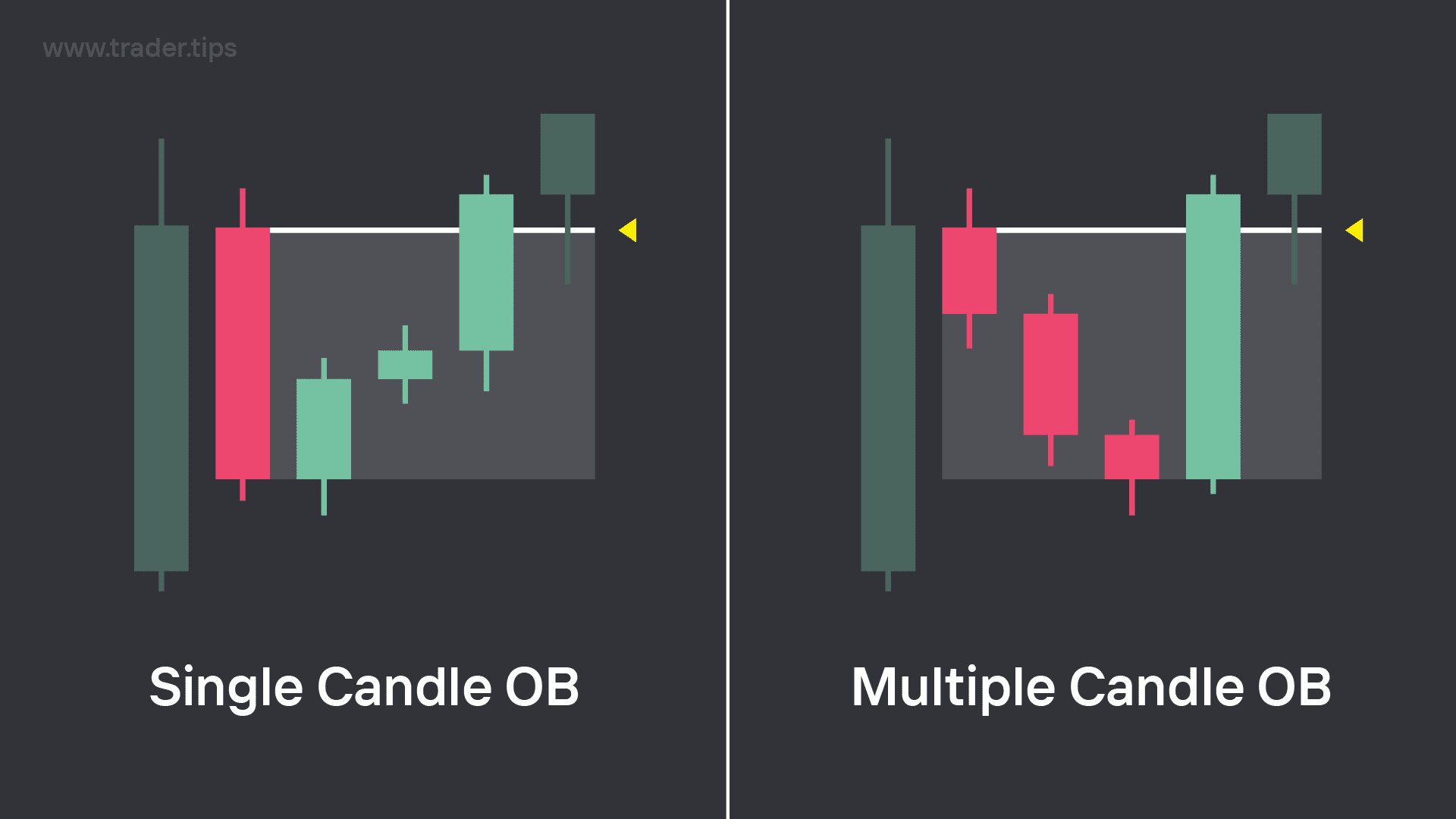
A single candle Bullish Order Block and a multiple candle Bullish Order Block.
Order Blocks can be created from either 1 singular candle, or multiple candles. They are treated the same in either case.
If the potential Order Block consists of just 1 candle, we wait for the market to close over the singular candle's body for the Order Block confirmation.
If the potential Order Block consists of multiple candles, the Order Block confirmation occurs when all of the bodies of the leg have been closed past.
The Order Block has to consist of the same colour candles
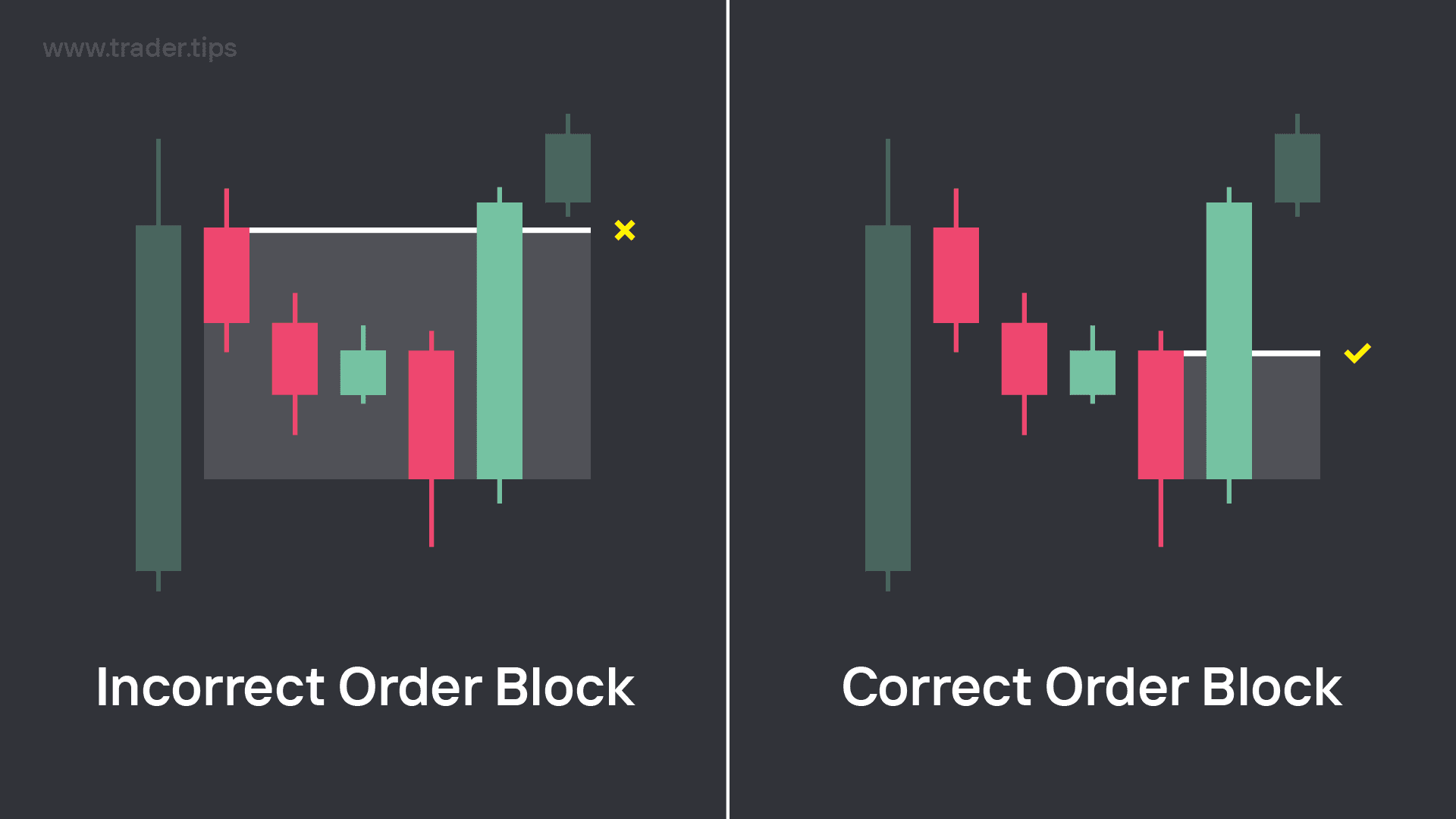
Example of a correct Order Block confirmation and an incorrect Order Block confirmation.
When it comes to determining which candles are used to identify an Order Block, we look at the last series of candles, or last candle if there is only one.
If there is an opposing candle (different colour) within the series of candles, we use the candles that formed after the 'break' in consecutive coloured candles as the Order Block.
Order Block Equilibrium (EQ)
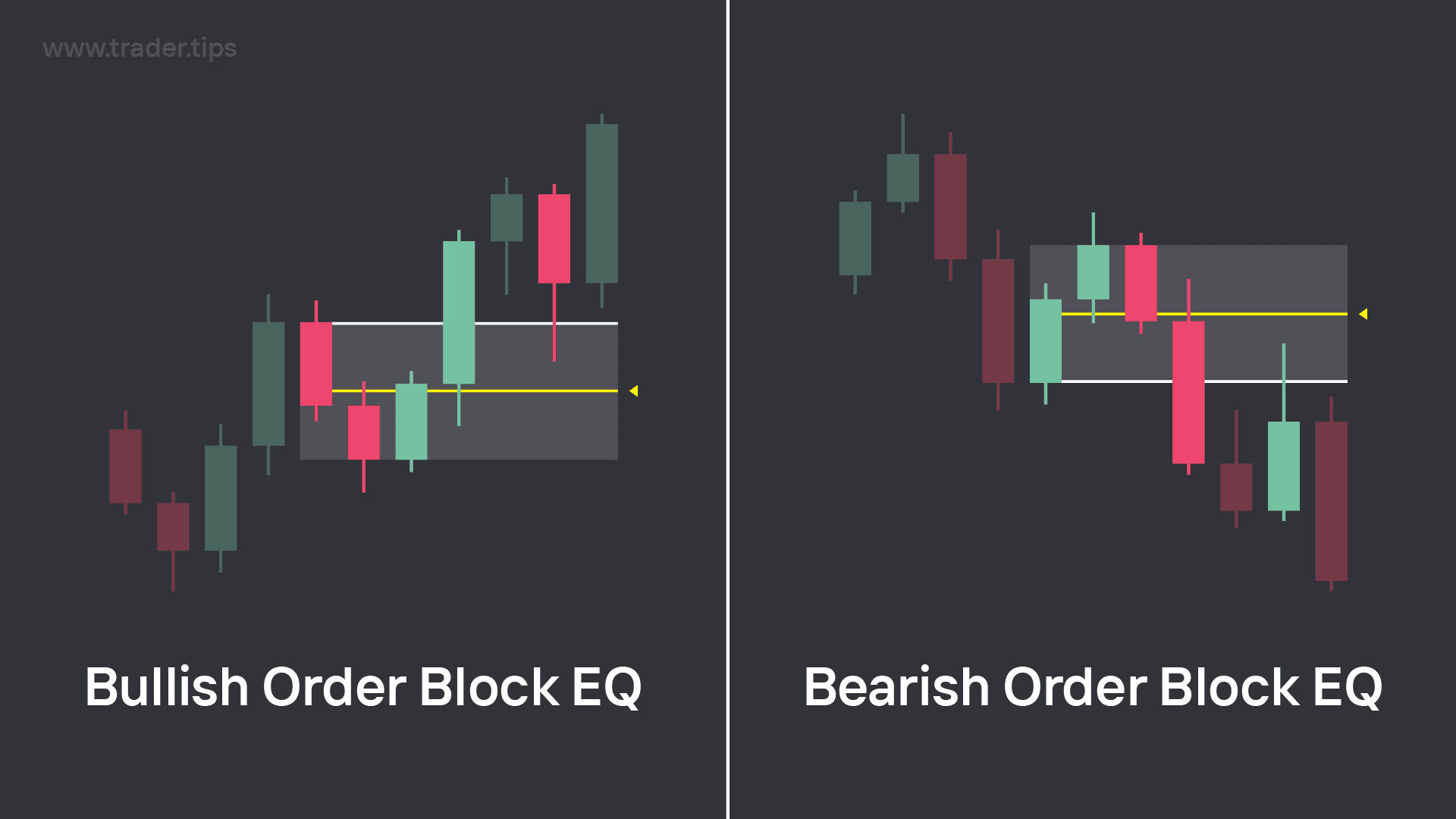
Equilibrium respect of a Bullish Order Block and a Bearish Order Block.
When it comes to determine the strength of an Order Block, an easy way to measure it is through drawing out it's Equilibrium (EQ), which is the 50% midlevel of the range that spans between the open of the first candle and the close of the last candle of the Order Block.
Ideally, we want to see the Equilibrium of the Order Block be respected because this shows strong support/resistance.
It's not the end of the world if price does push through the Equilibrium level, but we don't really want to see a candle close past this level because this signals weakness, which obviously isn't a good sign.
When is an Order Block Invalidated?
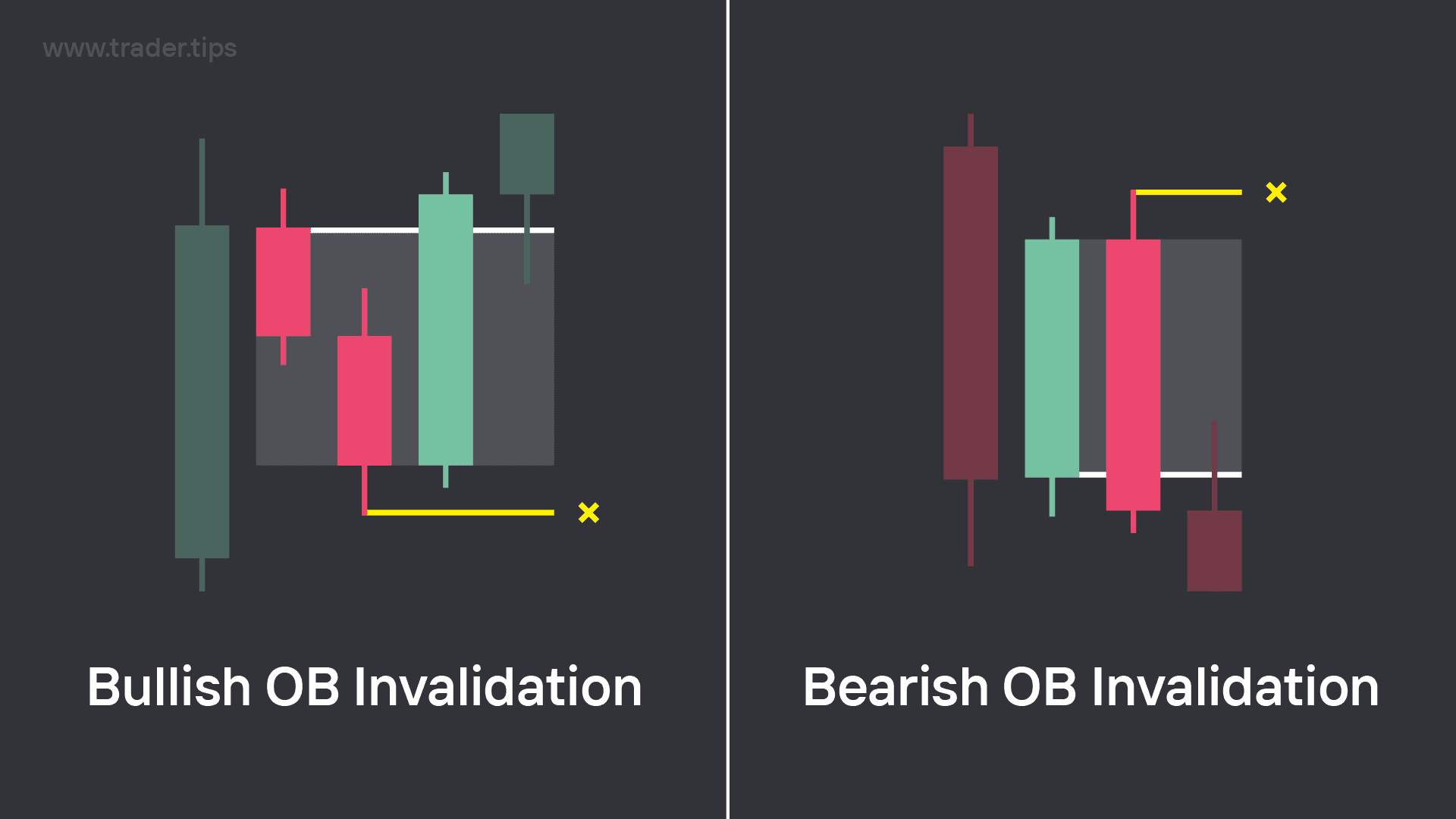
Example of Invalidation Levels for a Bullish Order Block and a Bearish Order Block.
The level we use to invalidate an Order Block is the low of a Bullish Order Block, or the high of a Bearish Order Block.
It doesn't matter if the high/low is formed in either series of engulfed candle(s), or the reversal candle(s) that create the reversal. We use whatever wick was lowest (Bullish Order Block) or highest (Bearish Order Block).
We only use Order Blocks created from Key Levels
Order Blocks can only be validated if they are created from a key level (PD Array), which are:
Swing High or Swing Low
Fair Value Gap (FVG)
Previous Order Block
We never want to use an Order Block as a trade entry by itself. If there is no confluence, we can just skip it.
The reason why is because we treat Order Blocks as a momentum reversal signal from a PD Array interaction.
Order Block created from Swing High or Swing Low
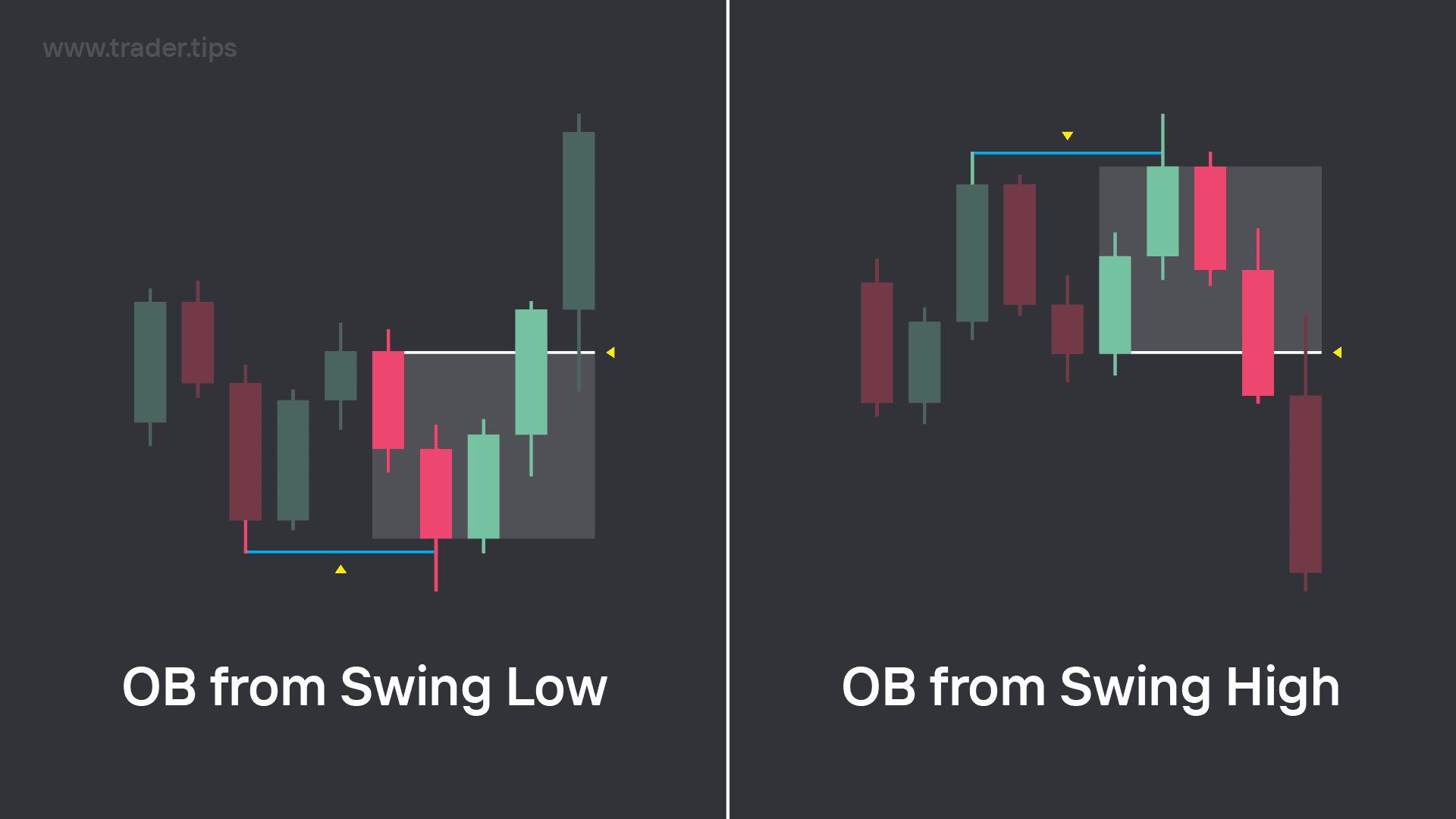
Examples of an Order Block creation from a Swing Low and a Swing High.
We always use the open of the first candle in the series of candles that hit the Swing High or Swing Low for the new Order Block confirmation.
Order Block created from Fair Value Gap (FVG)
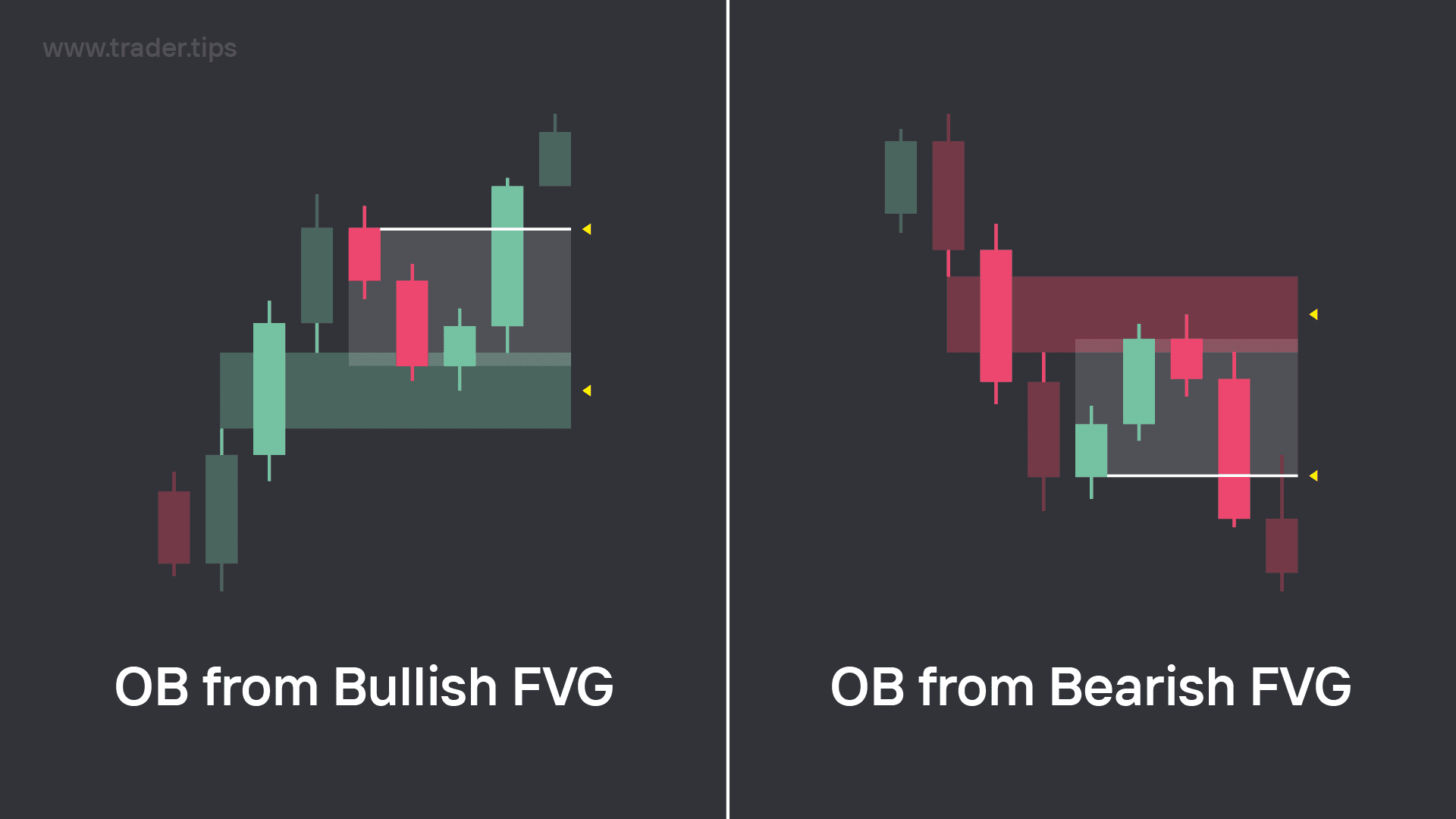
Examples of an Order Block creation from a Fair Value Gap (FVG).
We always use the open of the first candle in the series of candles that hit the Fair Value Gap for the new Order Block confirmation.
Order Block created from Previous Order Block
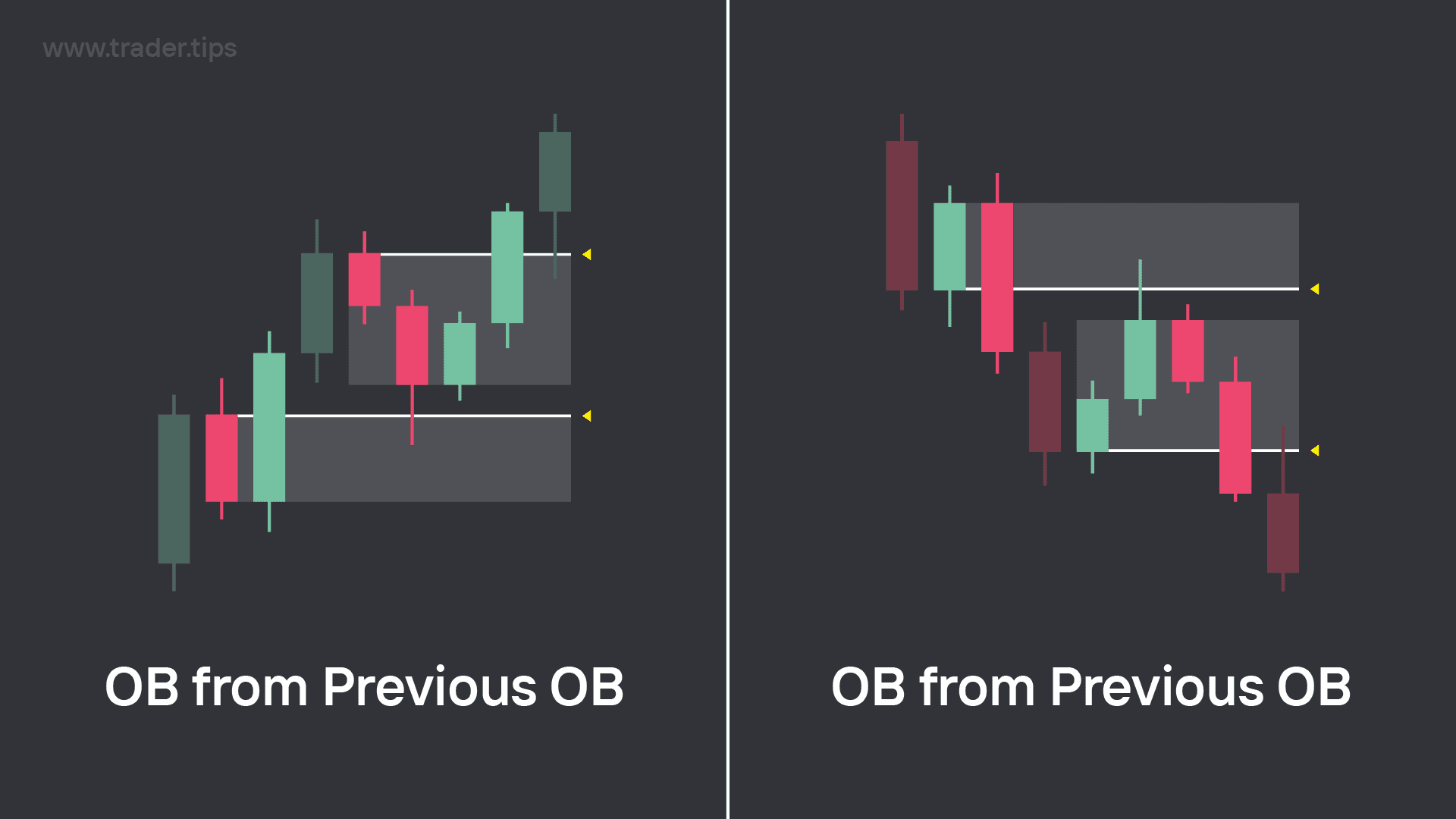
Examples of an Order Block creation from previous a Order Block.
We always use the open of the first candle in the series of candles that hit the previous Order Block for the new Order Block confirmation.
Using Order Blocks for Continuations

Example of how Order Blocks can be used to measure if a trending structure is continuing.
Order Blocks are most commonly used as a way to determine if the current trending structure is continuing.
It doesn't mean we want to trade every Order Block, it is more so used as a way to keep track of the trend's strength in being able to continue engulfing the new retracement legs.