
Uptrends and Downtrends
Uptrends and Downtrends are created when the market is pushing up or down with strength.
What are Uptrends and Downtrends in trading?
When the market moves, it can either move up or down.
But this doesn’t mean it just moves in a straight line. Instead, the market creates ‘trends’ which are made up of swing highs and lows.
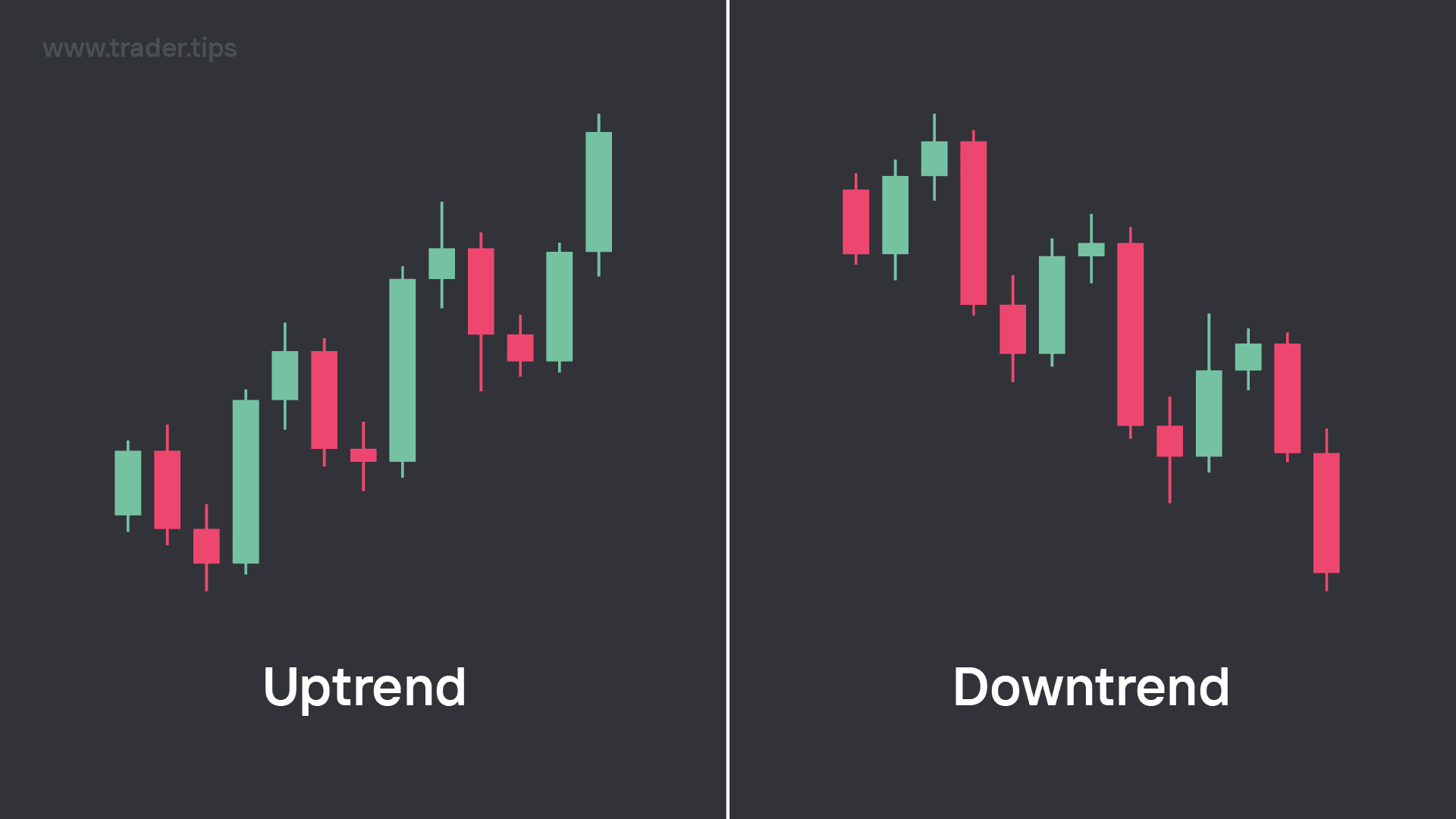
Example of an Uptrend and a Downtrend
There are 2 types of trending phases, which are:
Uptrends:
When the market is moving higher over a period of time with a lot of bullish strength.
Downtrends:
When the market is moving lower over a period of time with a lot of bearish strength.
Bullish and Bearish Legs
As mentioned, the market doesn't move straight up or straight down, it will instead create 'legs' that will either continue the expansion of the trend, or create a retracement.
A 'leg' refers to the series of candles that spans from a swing high to a swing low, or a swing low to a swing high.
When it comes to trending structures, we can categorise legs into 2 groups:
Expansion Leg:
An expansion leg is a price leg that has taken out either a previous swing high, or a previous swing low, to expand the market price out of the range of the previous leg.
Retracement Leg:
A retracement leg is a price leg that is created after an expansion leg. A retracement leg only creates a shallow move, failing to take out the previous swing high or swing low of the previous expansion leg.
Bullish Expansions and Bearish Retracements in an Uptrend
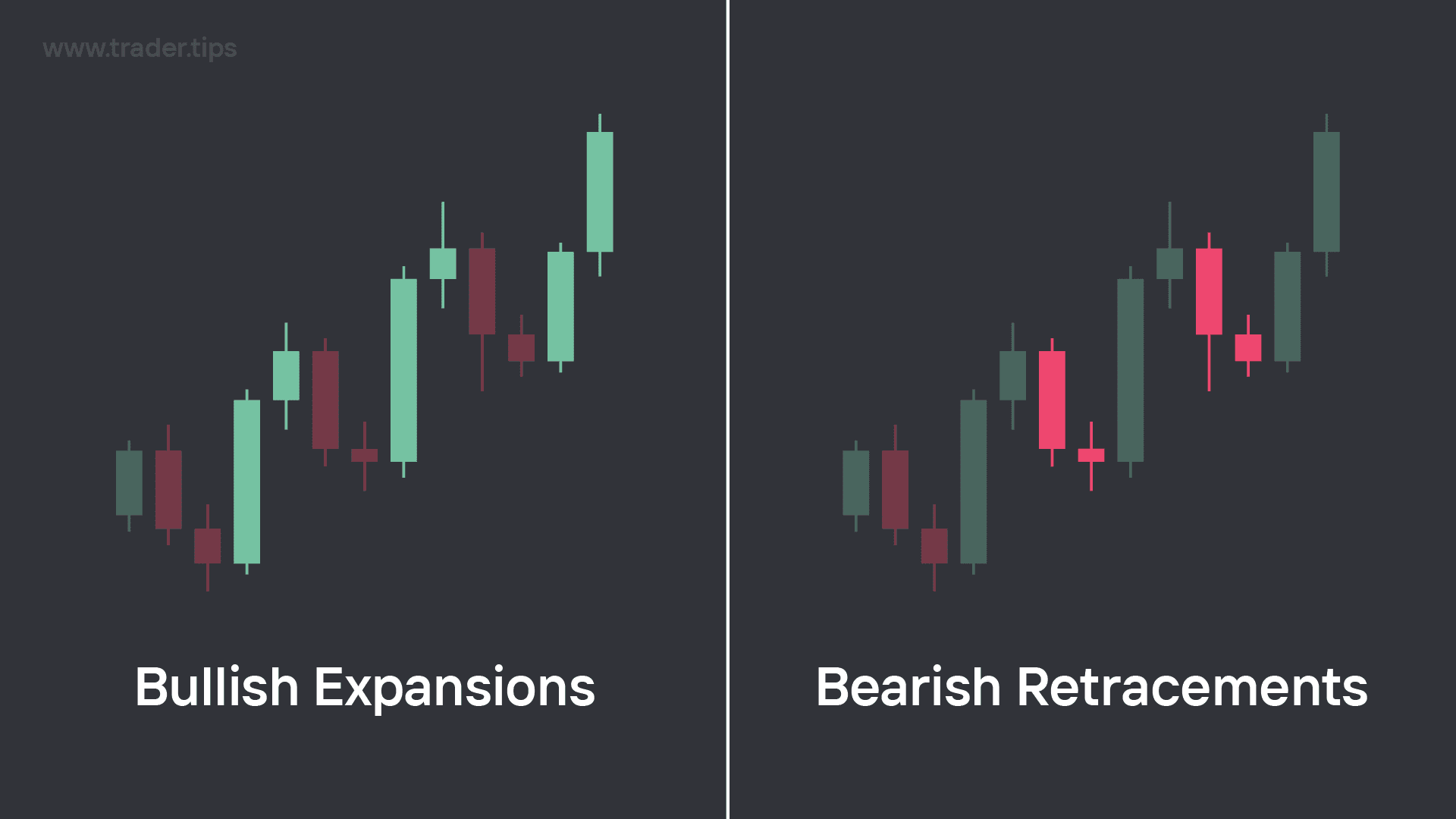
Bullish Expansion Legs and Bearish Retracement Legs in an Uptrend
In an uptrend, the bullish expansion legs are strong, breaking up and past the previous highs of the recent expansion legs.
Whilst the bearish retracement legs are weak, failing to push low enough to break through the swing lows of the previous bullish expansion legs.
Bearish Expansions and Bullish Retracements in a Downtrend
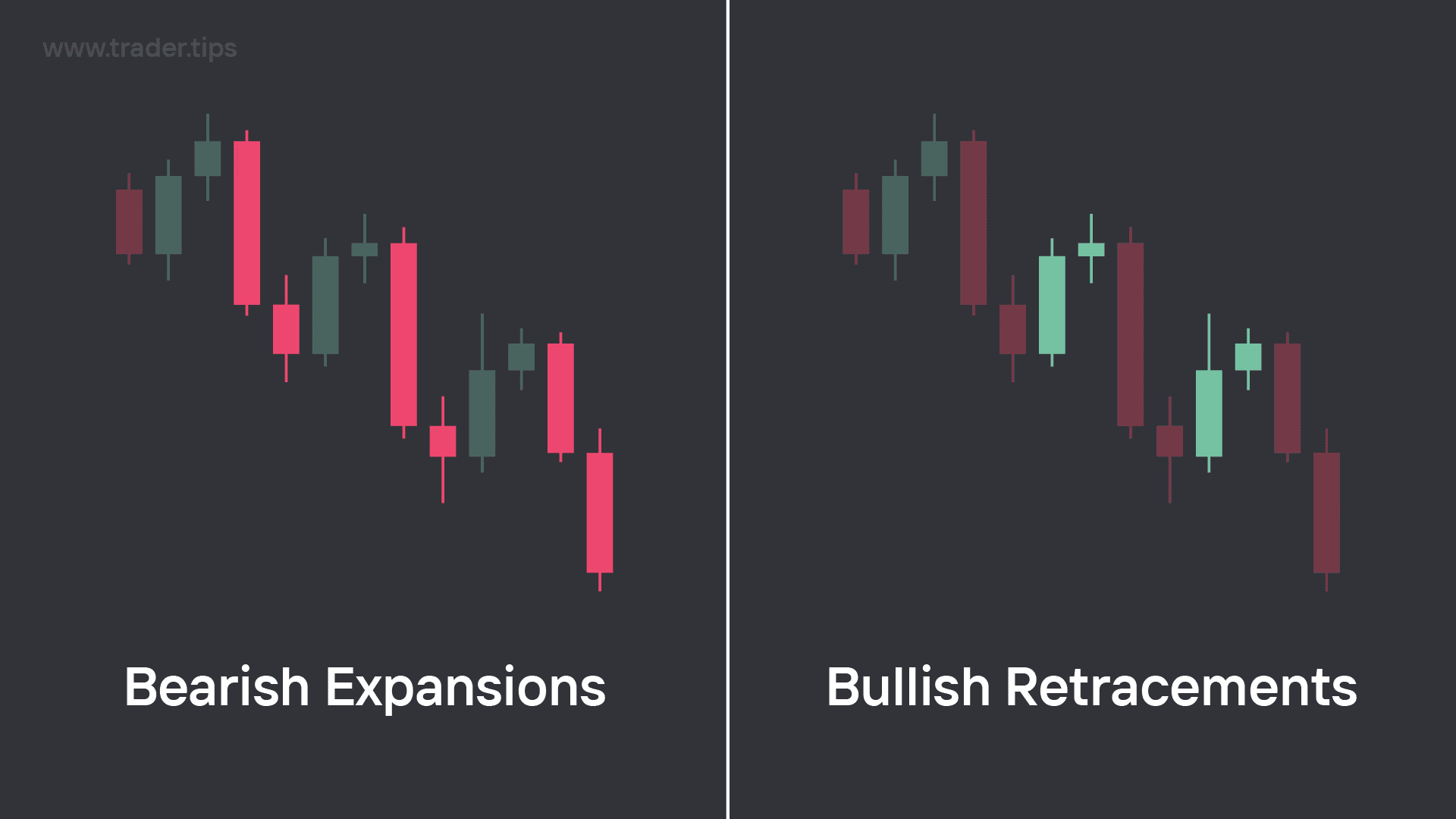
Bearish Expansion Legs and Bullish Retracement Legs in an Downtrend
In an downtrend, the bearish expansion legs are strong, breaking down and past the previous lows of the recent expansion legs.
Whilst the bullish retracement legs are weak, failing to push high enough to break through the swing highs of the previous bearish expansion legs.
Higher Highs and Higher Lows of an Uptrend
The specific criteria we use to define an uptrend is when the market is making 'Higher Highs' and 'Higher Lows'.
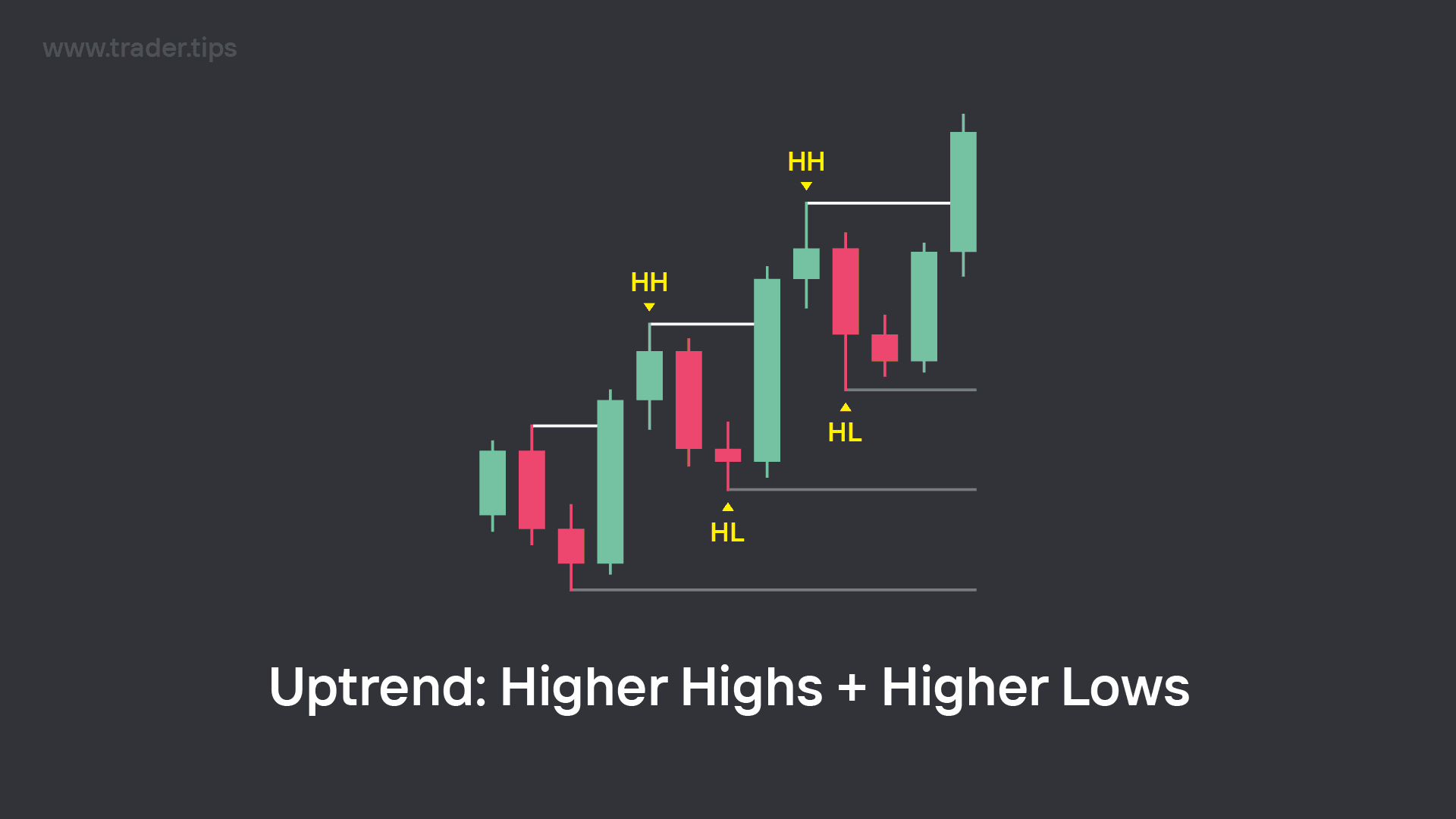
Higher Highs and Higher Lows in an Uptrend
Higher High:
A Higher High (HH) forms when a Swing High is created at a price that is higher than that of the last Swing High.
Higher Low:
A Higher Low (HL) forms when a Swing Low is created at a price that is higher than that of the last Swing Low.
In simple terms, this means during an uptrend, there is a lot of bullish strength where we are seeing the market continue to push through the previous highs to form new higher highs.
Whereas the bearish strength is weak, meaning that when the buying pressure stalls and the market creates a retracement leg, it doesn't have the strength to push low enough to take out the previous swing low.
Lower Highs and Lower Lows of a Downtrend:
The specific criteria we use to define an downtrend is when the market is making 'Lower Highs' and 'Lower Lows'.
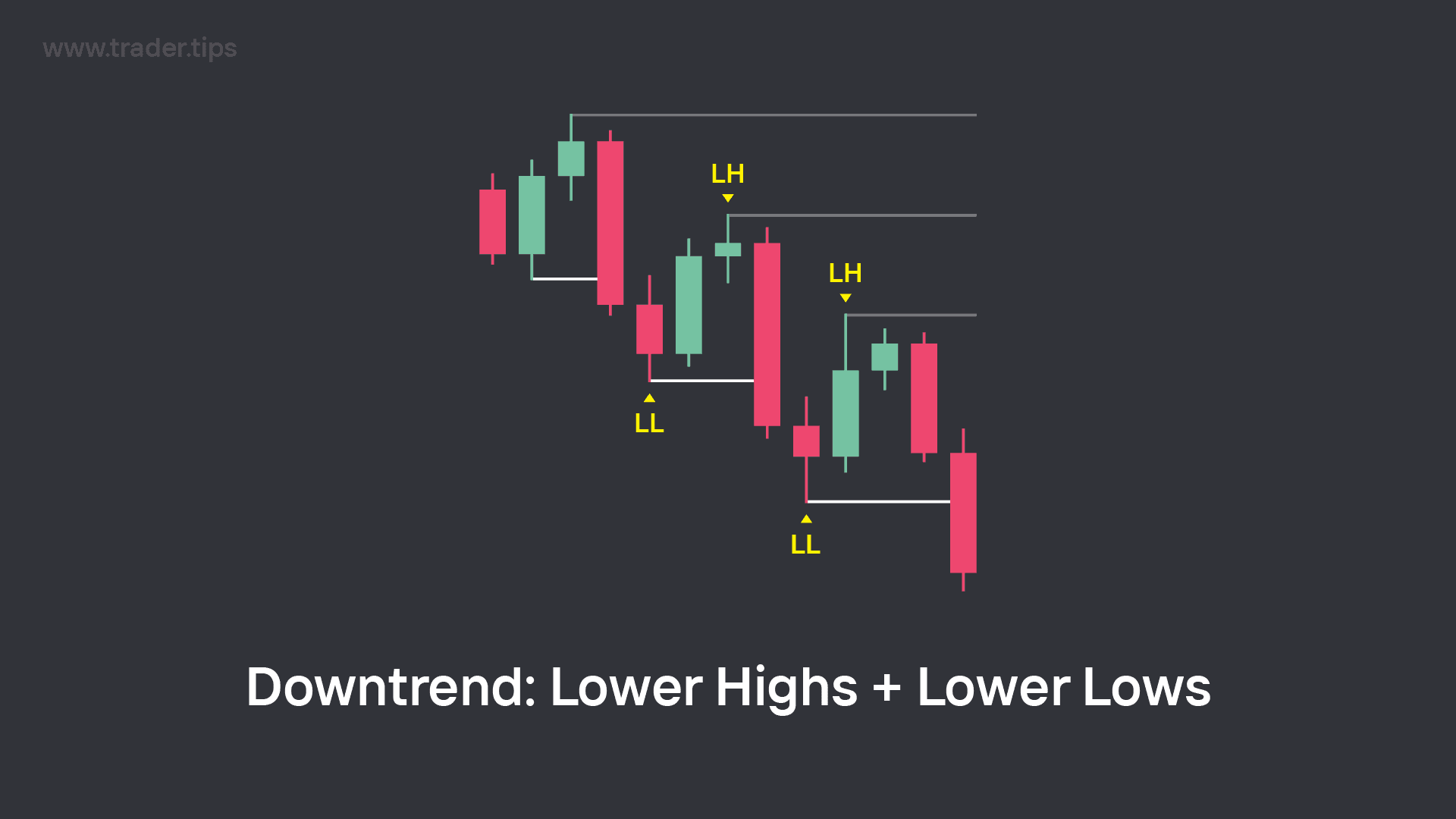
Lower Highs and Lower Lows in a Downtrend
Lower High:
A Lower High (LH) forms when a Swing High is created at a price that is lower than that of the last Swing High.
Lower Low:
A Lower Low (LL) forms when a Swing Low is created at a price that is lower than that of the last Swing Low.
In simple terms, this means during an downtrend, there is a lot of bearish strength where we are seeing the market continue to push through the previous lows to form new lower lows.
Whereas the bullish strength is weak, meaning that when the selling pressure stalls and the market creates a retracement leg, it doesn't have the strength to push high enough to take out the previous swing high.
This is covers the basics of trends, but we will be covering this further along with 'consolidations' in the Market Phases chapter later on in this course.