
Expansion Candles
Expansion Candles are used as signals for determining strength in bullish or bearish moves.
What is an Expansion Candle?
An Expansion Candle is created when a candle closes past the either the top wick or bottom wick of the previous candle.
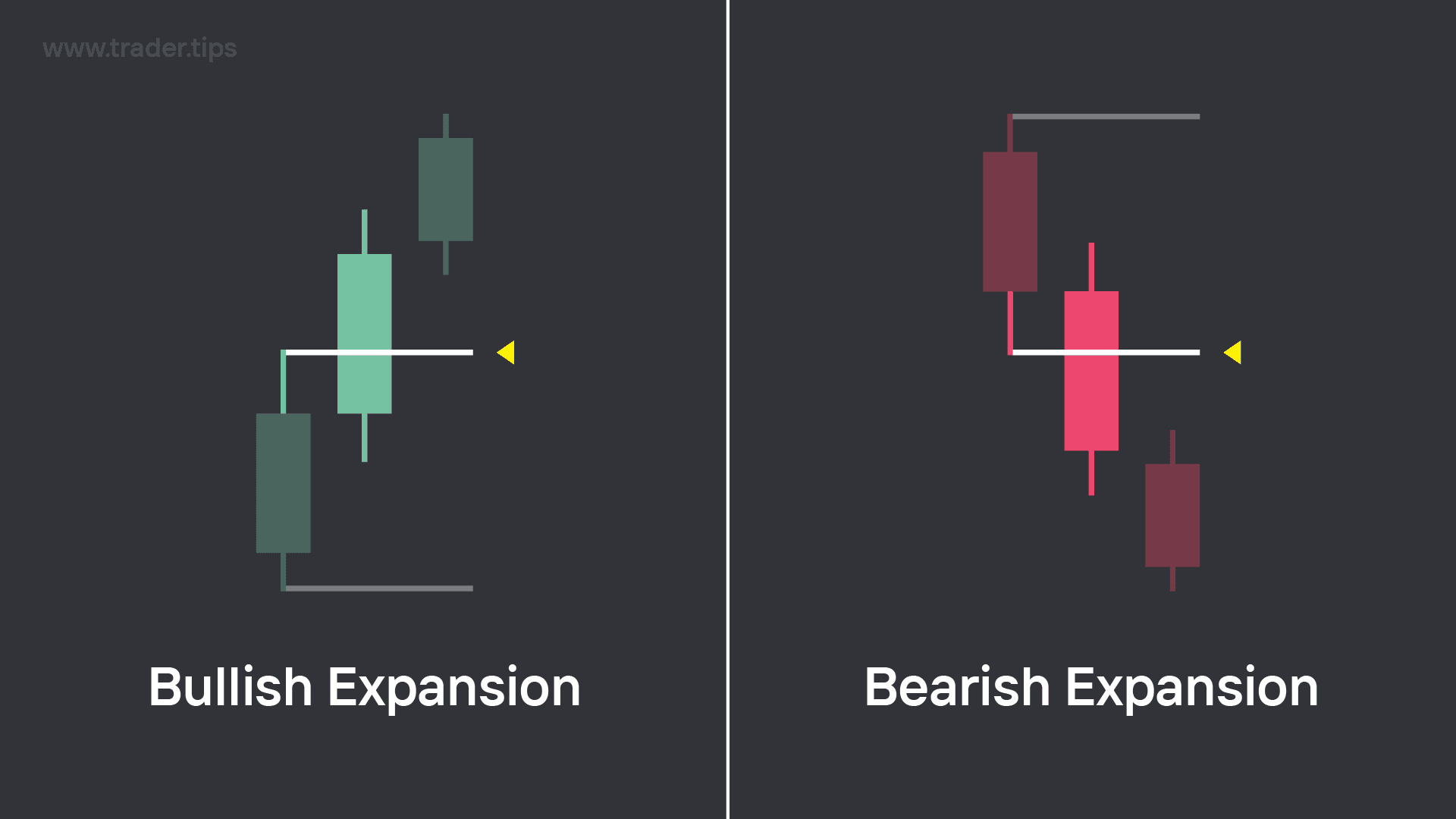
Examples of a Bullish Expansion Candle and a Bearish Expansion Candle.
Bullish Expansion Candles signal bullish strength.
Bearish Expansion Candles signal bearish strength.
When an Expansion Candle is created, we use it as a signal that the current directional bias (bullish or bearish) will continue into the next candle. Essentially acting as a continuation signal.
This means after a Bullish Expansion Candle, we typically expect the next candle to also close as a bullish candle.
After a Bearish Expansion Candle, we typically expect the next candle to also close as a bearish candle.
However, external factors must be included in this projection.
Just because we have an Expansion Candle, it doesn't mean the next candle is guaranteed to be of the same colour. This is why we use Expansion Candles as confirmation for our trade ideas or bias in specific scenarios that we will look further into within the chapter.
Bullish Expansion Candle
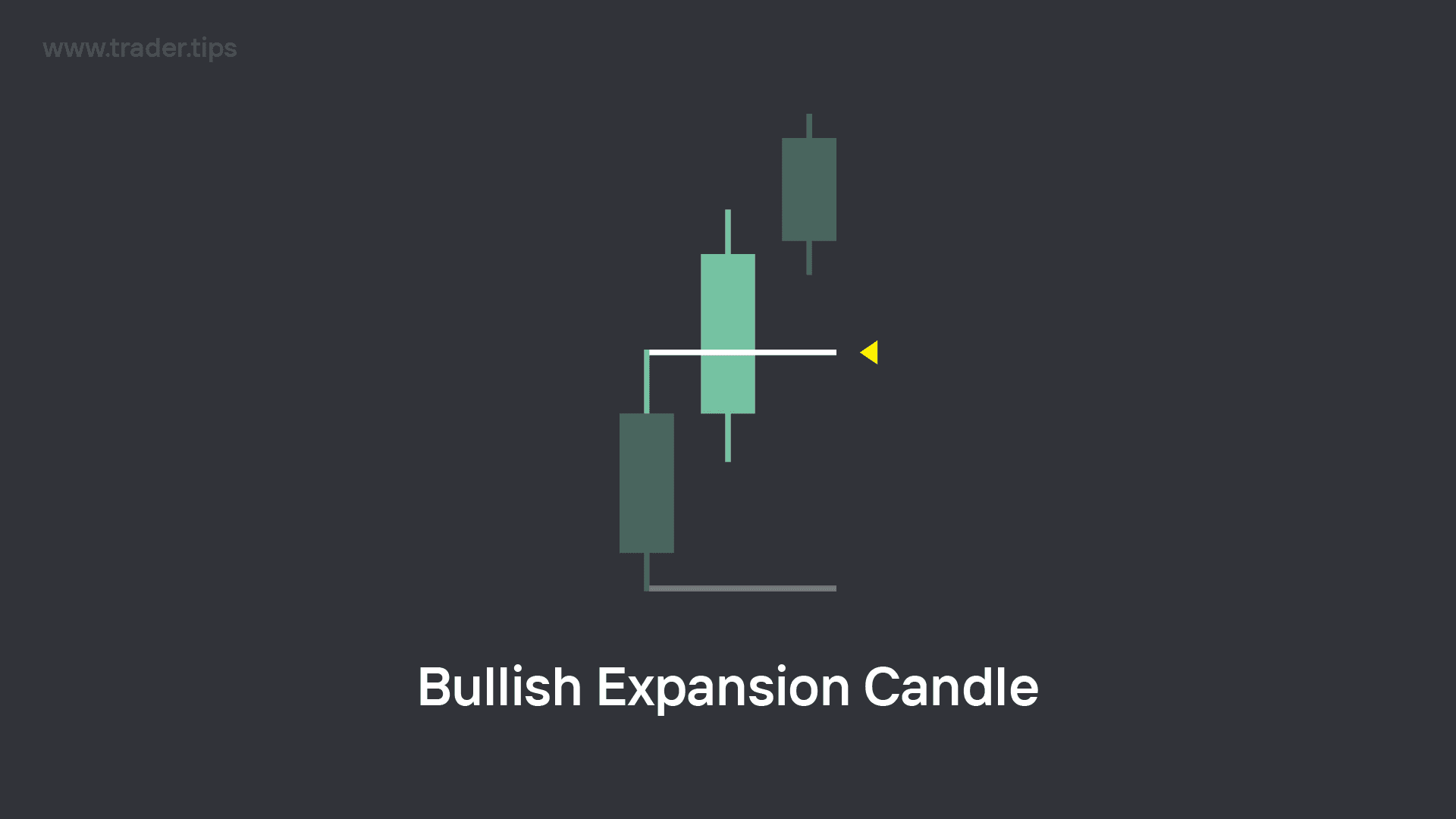
Example of a Bullish Expansion Candle
For the criteria of a Bullish Expansion Candle, the candle would push up and past the top wick of the previous candle, and most importantly, have a candle closure above the previous candle's top wick.
This signals strength in the bullish pressure, suggesting the market wishes to continue pushing further in the upward direction, so our bias would be that the following candle that is created after a Bullish Expansion Candle will most likely be another bullish candle.
Bearish Expansion Candle
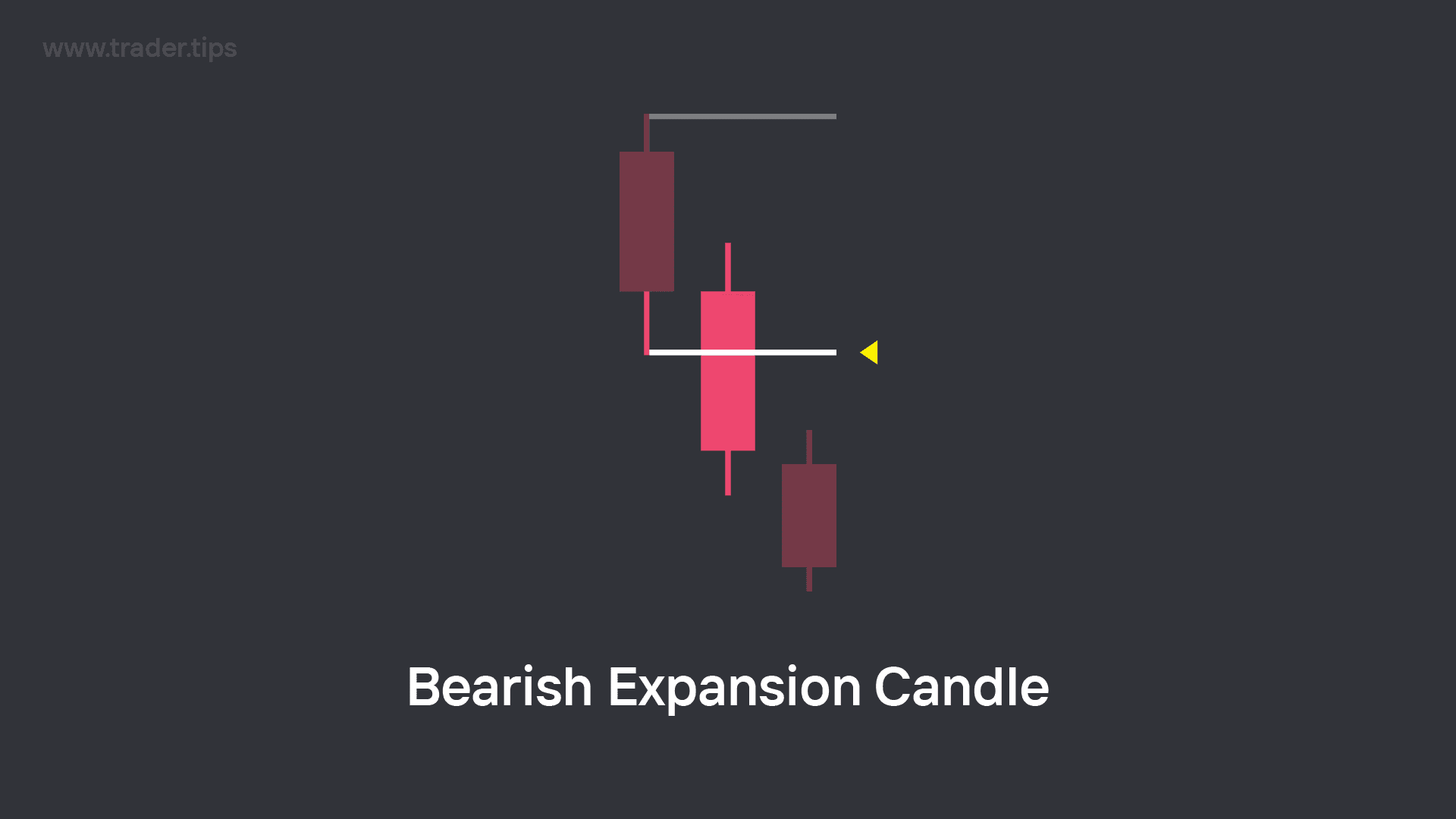
Example of a Bearish Expansion Candle
For the criteria of a Bearish Expansion Candle, the candle would push down and past the bottom wick of the previous candle, and most importantly, have a candle closure below the previous candle's bottom wick.
This signals strength in the bearish pressure, suggesting the market wishes to continue pushing further in the downward direction, so our bias would be that the following candle that is created after a Bearish Expansion Candle will most likely be another bearish candle.
Equilibrium (EQ) of an Expansion Candle
For a 'strong' expansion candle, we ideally want to see the equilibrium level of the Expansion Candle be respected by the candle that follows it.
This means we want to see the next candle's upper or lower wick (depending on if it's a Bullish or Bearish Expansion Candle) be created without disrespecting the EQ level.
Equilibrium (EQ) of a Bullish Expansion Candle:
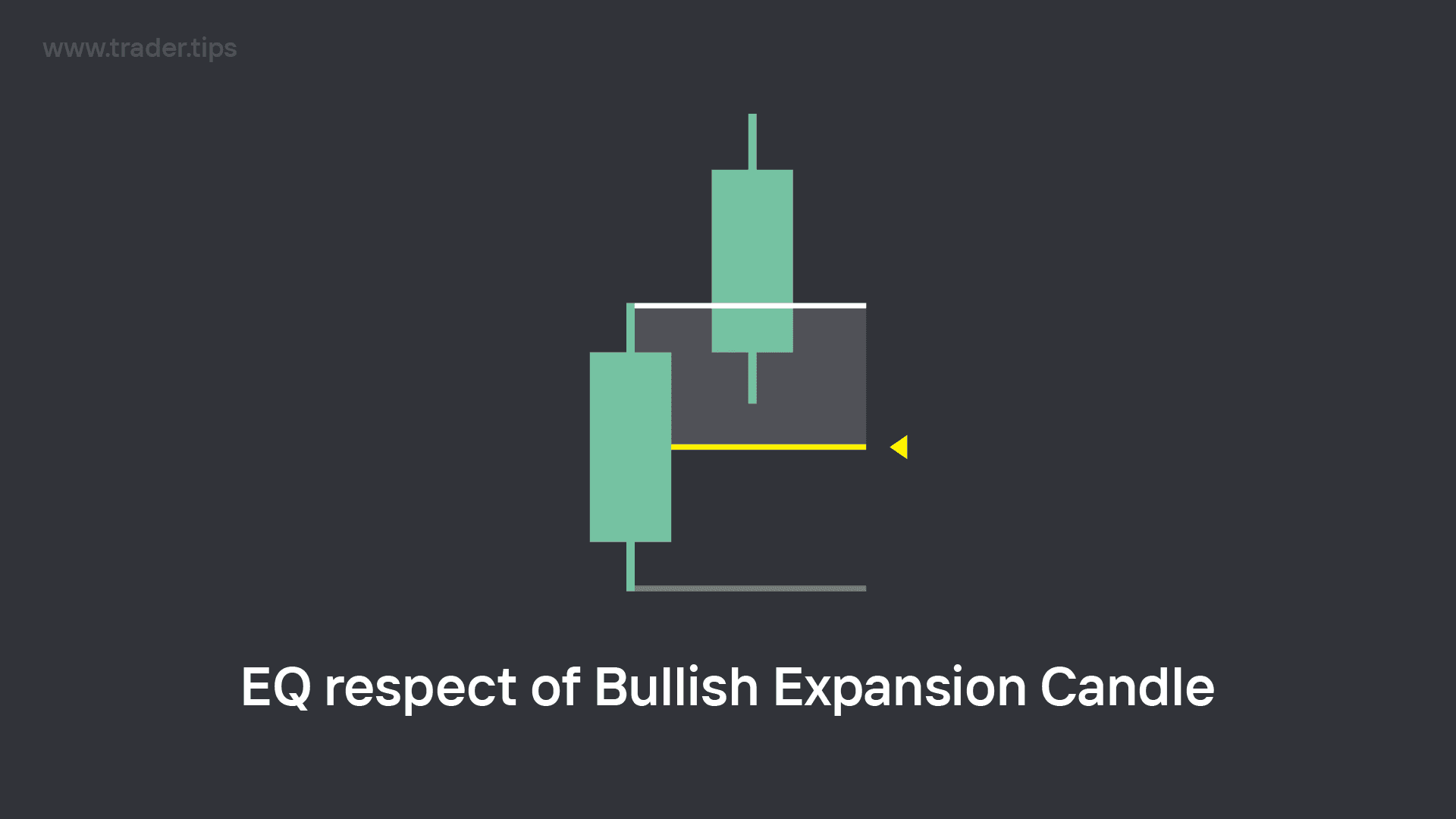
Equilibrium (EQ) of Bearish Expansion Candle being respected by the following candle.
For a strong Bullish Expansion Candle, we would ideally like to see the lower wick of the next candle form within the upper half of the previous candle's range (above the previous candle's EQ), respecting the equilibrium level.
Equilibrium (EQ) of a Bearish Expansion Candle:
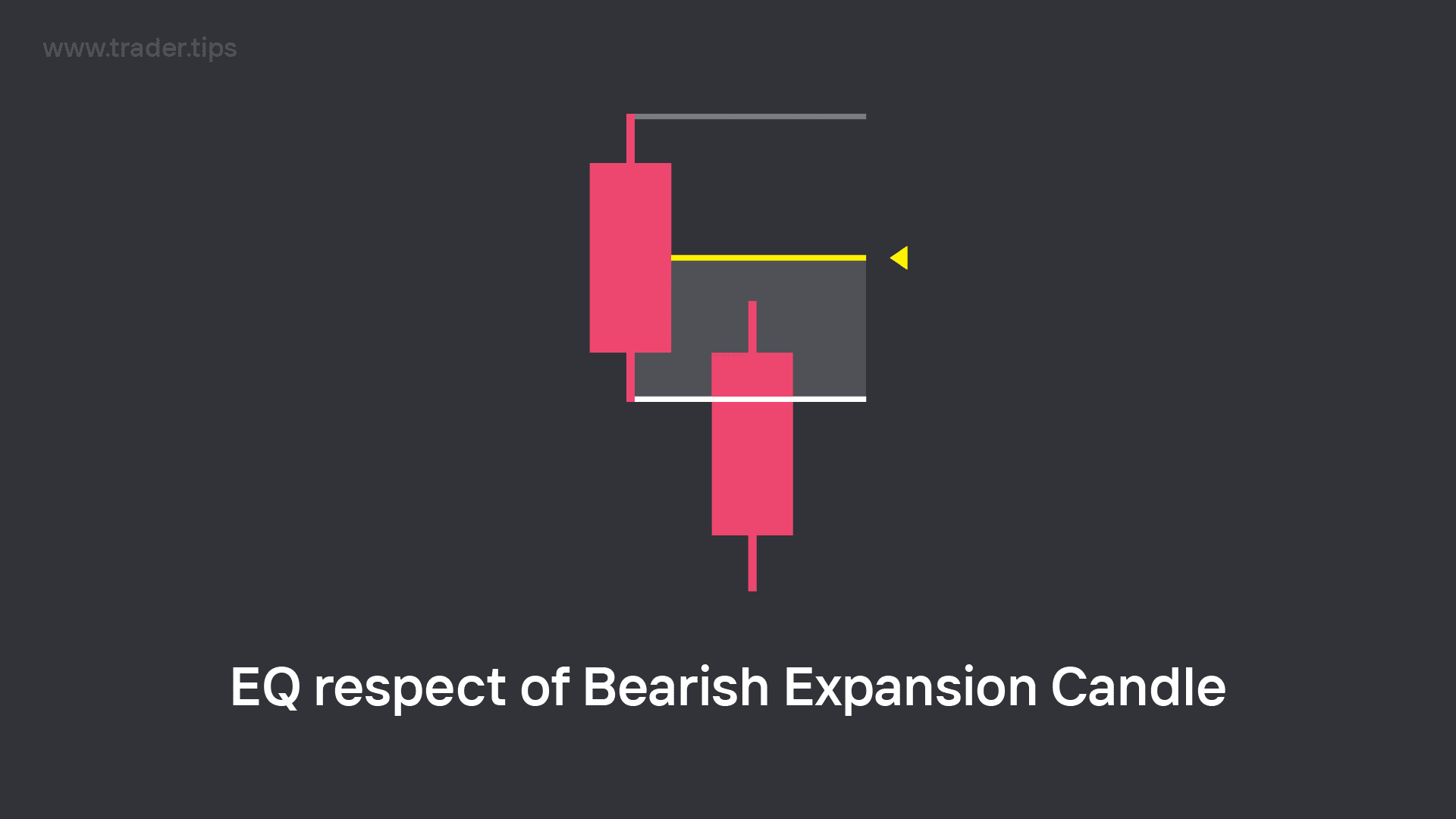
Equilibrium (EQ) of Bearish Expansion Candle being respected by the following candle.
For a strong Bearish Expansion Candle, we would ideally like to see the upper wick of the next candle form within the lower half of the previous candle's range (below the previous candle's EQ), respecting the equilibrium level.
Using this logic, when a new candle opens after a Expansion Candle has formed, we can project the Equilibrium level of the Expansion Candle to determine where we would like to see the new candle's high/low form if we are anticipating the strong buying/selling pressure to continue within the new candle's structure.
When should you not trust an Expansion Candle?
it goes without mention that like with everything in trading, an Expansion Candle doesn't provide a certainty for how the next candle will play out, it's just a characteristic that we use to determine the strength of buying/selling pressure.
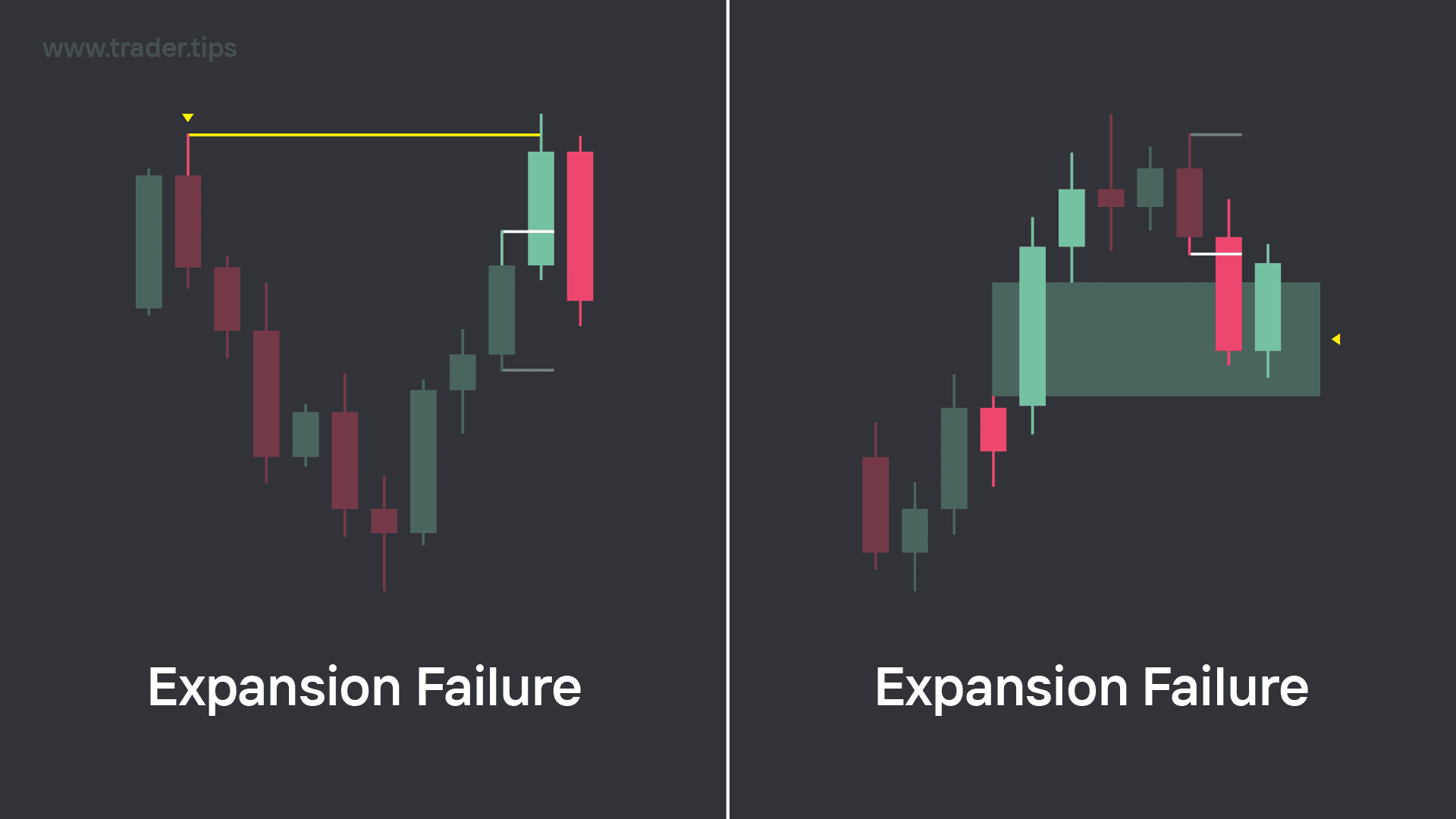
Example of Expansion Candle failures as a result of a Liquidity Sweep and an Fair Value Gap rejection.
If during the Expansion Candle, or during the candle that follows it, we see an interaction with a PD array such as an External Liquidity Level or a Fair Value Gap, we have to assume that this is where a new phase of price action can occur (a new swing high/low can form), meaning we could potentially see reversal in the directional bias.
So we cannot blindly trust that the next candle after a expansion candle will always be another expansion candle, we have to consider the larger market structure as a whole, instead of just 1 candle.
When is an Expansion Candle considered Higher Probability?
We use Expansion Candles as a confirmation of support for our trade ideas.
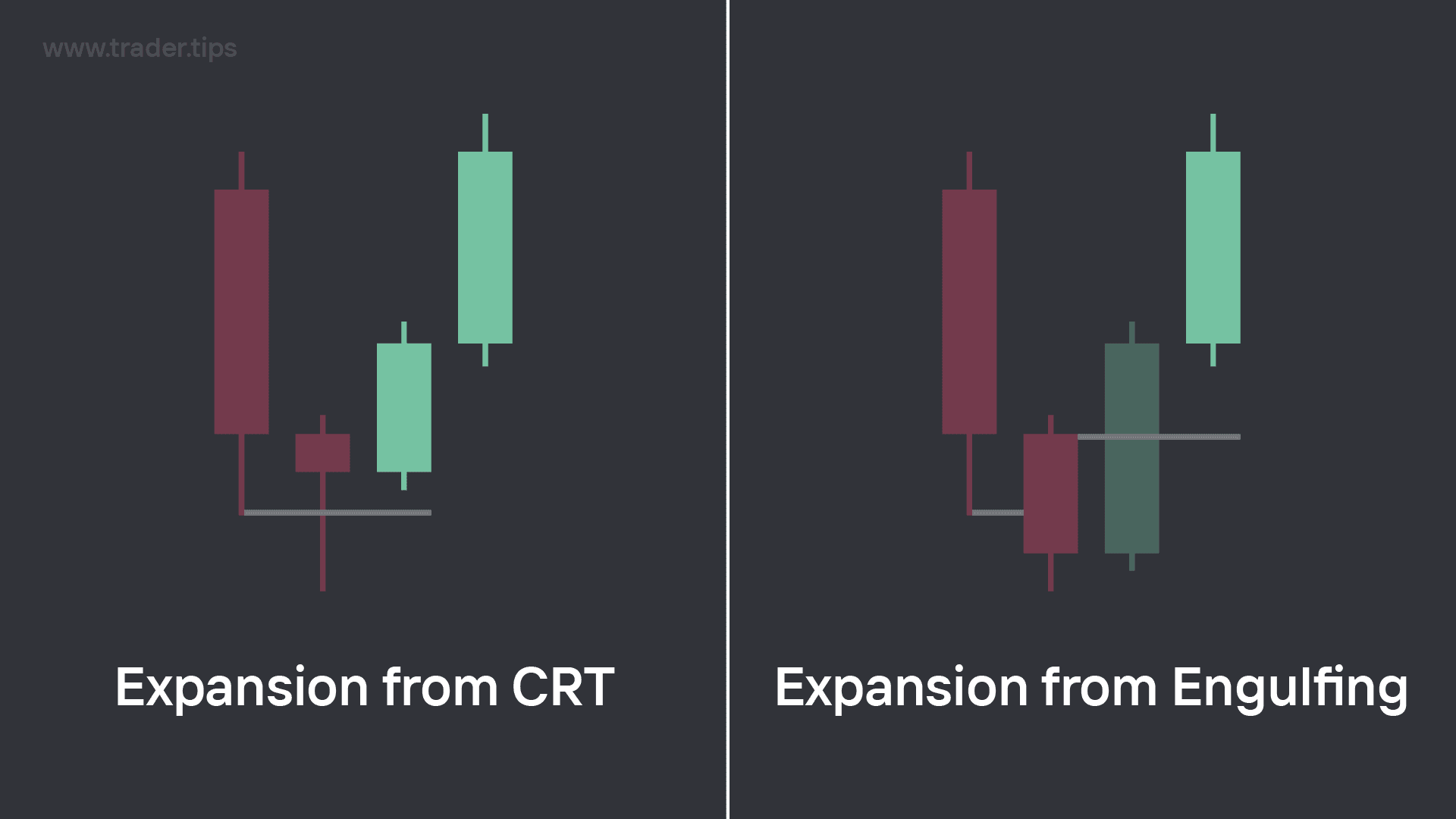
Examples of an Expansion Candle after a CRT formation and an example of an Expansion Candle after an Engulfing formation.
This is why we prefer to only trade from expansion candles that have formed as a result a new swing point being formed, because this will give us the highest probability for our expansion setups to work.
We typically want to target the 3rd or 4th candle in a swing point sequence, after either a CRT Candle formation or an Engulfing Candle formation has been confirmed.
This will be covered further in the next chapters.